Much like a dry forest regenerating from fire, the Big Scrub is showing signs of recovery from last month’s devastating floods. Our team has been out inspecting remnants to begin the task of assisting recovery and planning for future impact from these extraordinary flooding events.
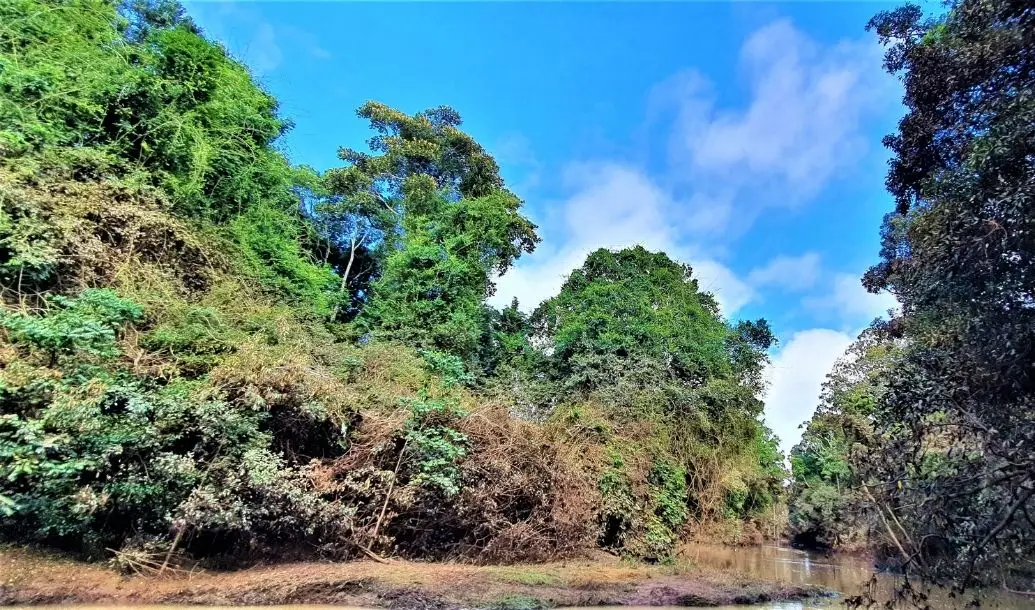
While plenty of evidence of adaptation to floodwaters was observed, the deluge didn’t leave our remnants untouched. Many stretches of healthy riparian vegetation within remnants suffered the same fate as more exposed creekbeds. Waterways, like Rocky Creek in Nightcap National Park, were torn up badly, with all riparian vegetation stripped and bare rock exposed. It’s feared there may be more undiscovered landslips deeper in Nightcap, possibly in areas burnt during the Black Summer fires, but treefalls and soft ground, along with pressing needs in the community, are still blocking a full assessment.
Nearer to Lismore, the Boatharbour remnant weathered the floodwaters better. The vegetation located in the remnant appeared well adapted to inundation with most species in good condition. There were signs of the water level left by silt on the leaves and some vegetation squashed by debris where it flowed between barriers within the forest. Some of these debris hang from above head height and continue to impede access. Threatened species such as Thorny Pea, Fragrant Myrtle and Native Guava all appeared unaffected by inundation. Many species are showing flushes of new growth and are responding positively. The Thorny Pea was even observed in flower. Remarkably, the banks surrounding the remnant held firm with minor scouring and mud deposition in varying intensity.
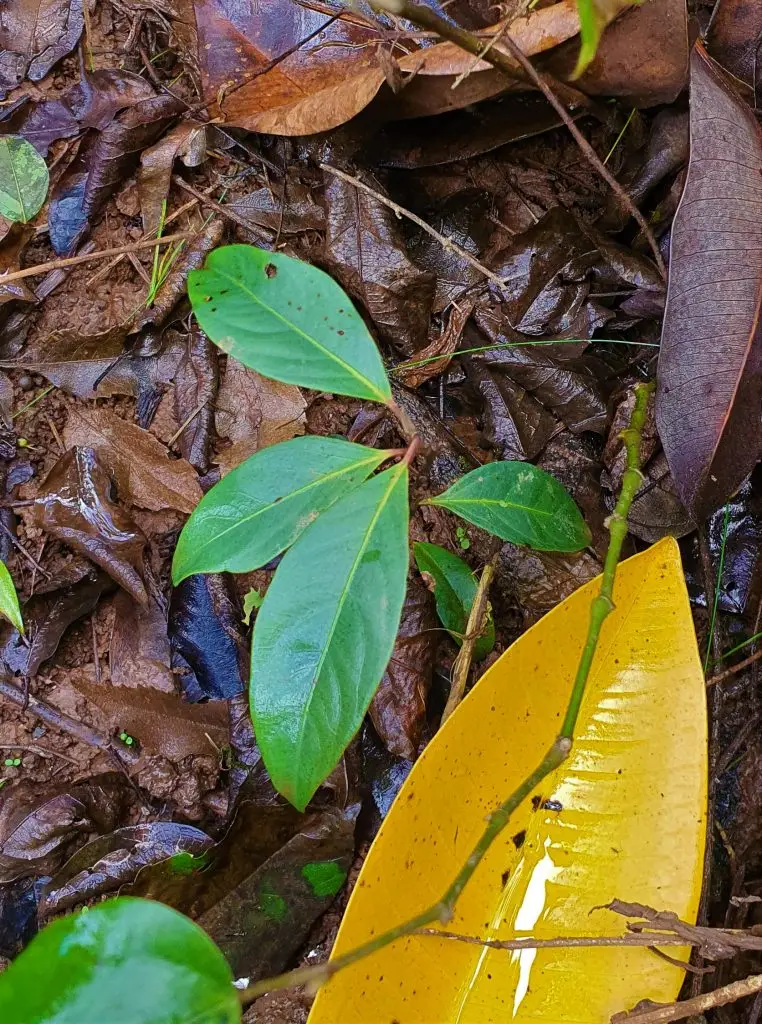
The story was similar at Booyong Flora Reserve and Wiltons and Hermans Scrub, while Bennys Creek and Johnstons Scrub sustained heavier damage.
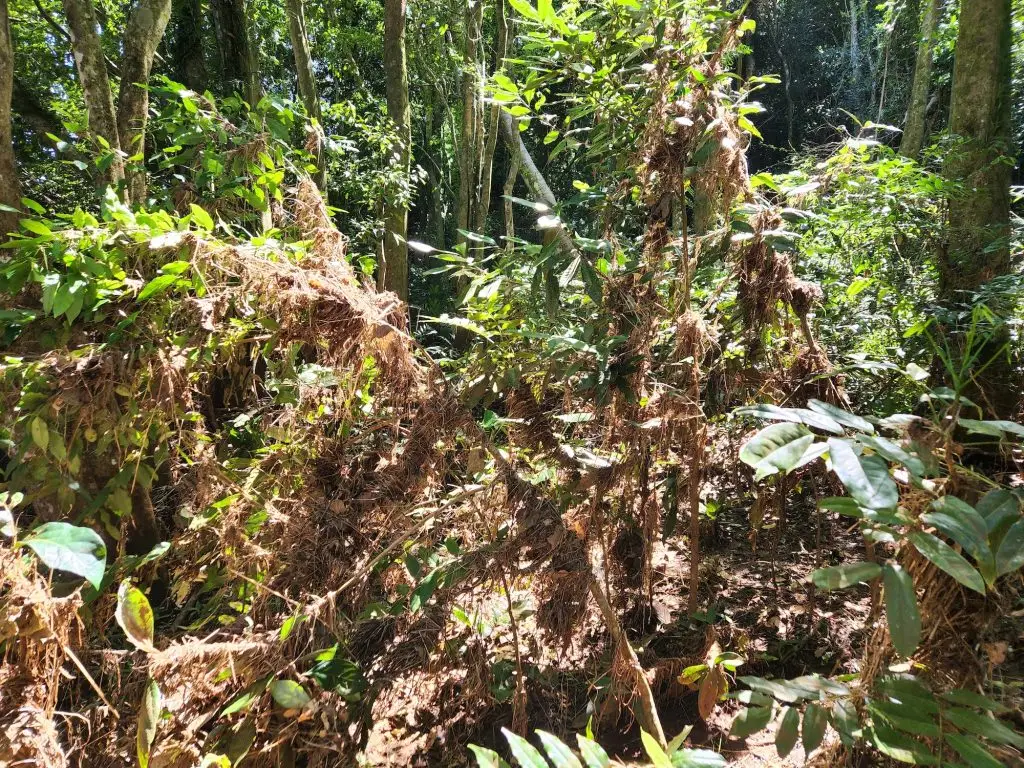
Booyong Flora Reserve and Hermans Scrub and Wilton Scrub escaped major damage. Photos: Darren Bailey
Johnstons Scrub was heavily hit by the floods. We normally get debris deposited at this site during the floods but this time we got more than 5m deep of logs and rubbish directly on top of our quadrat monitoring site. 15 years of rainforest growth has been flattened and mature populations of Isoglossa and Thorny Pea are no longer discernible. Major slumping and erosion of the creekbank has occurred and the fresh deposit of silt is almost impossible to walk on. We can expect the Ck Sandpaper Fig and Lilly Pilly to recover to a certain extent but managing the area going forward will be very difficult. Opportunities for weeds like Madeira Vine, Balloon Vine, White Glycine, Coral Tree and Giant Devils Fig are plentiful and likely to outgrow any emerging rainforest trees.
Report and Photos: Darren Bailey.
Ongoing management to stave off the reintroduction of weed populations will be needed. There is evidence of exotic crop species, like Pecans, and common weeds having been deposited. Madeira Vine, Cats Claw Creeper and Trad are usually among the first to emerge from mud after being washed in. Continued efforts will be needed to identify and manage these new weed incursions before they reach maturity.
While we regroup, plans will be put in place by the experts at Envite Environment, Big Scrub Regen, Darren Bailey and our other regen partners to manage weeds as well as the introduction of plastic and other waste. Our other projects will be hit by delays, but in the grand scheme of things our thoughts remain with the community. All of us at Big Scrub Landcare extend our sincere sympathy to those who have lost loved ones, their homes and livelihoods. Our thoughts and prayers are for the green shoots of recovery to grow as strongly in our towns and communities as they do in our resilient rainforest.