About The Big Scrub
© Iain Stych
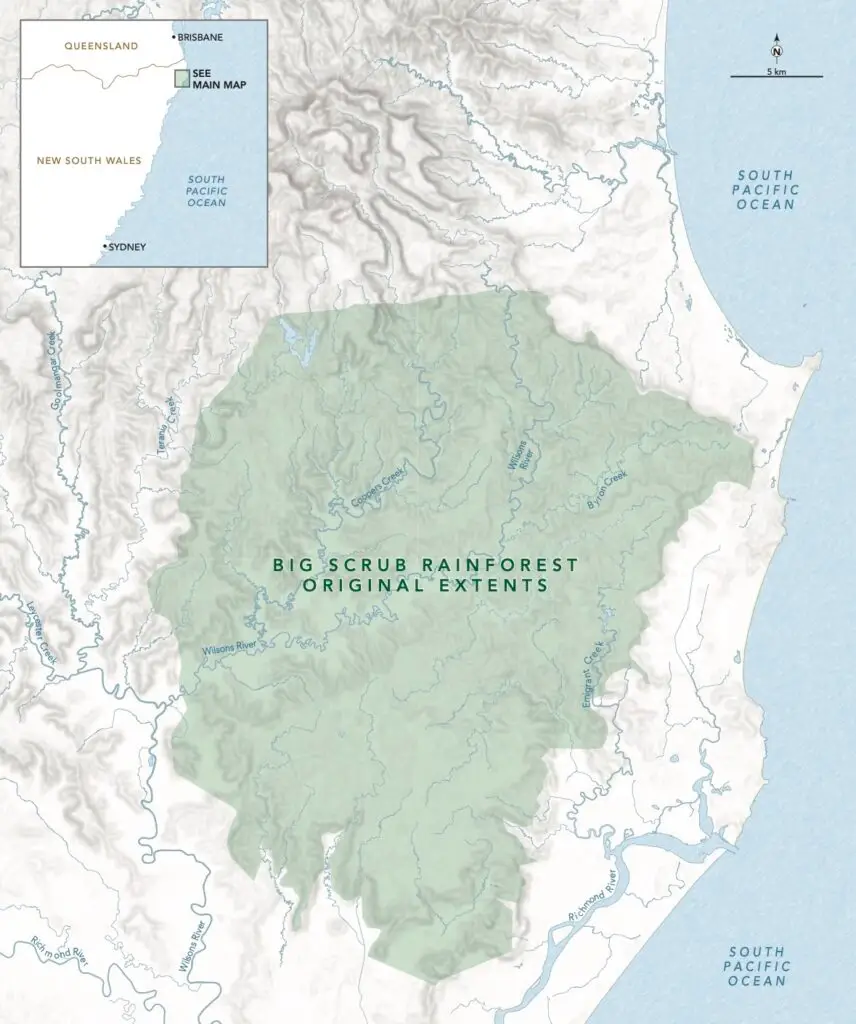
The “Big Scrub” was once the largest lowland subtropical rainforest in Australia: it covered 75,000 ha in the hinterland of Byron Bay, until cleared by European settlers. Today, only 1% of this once mighty rainforest remains.
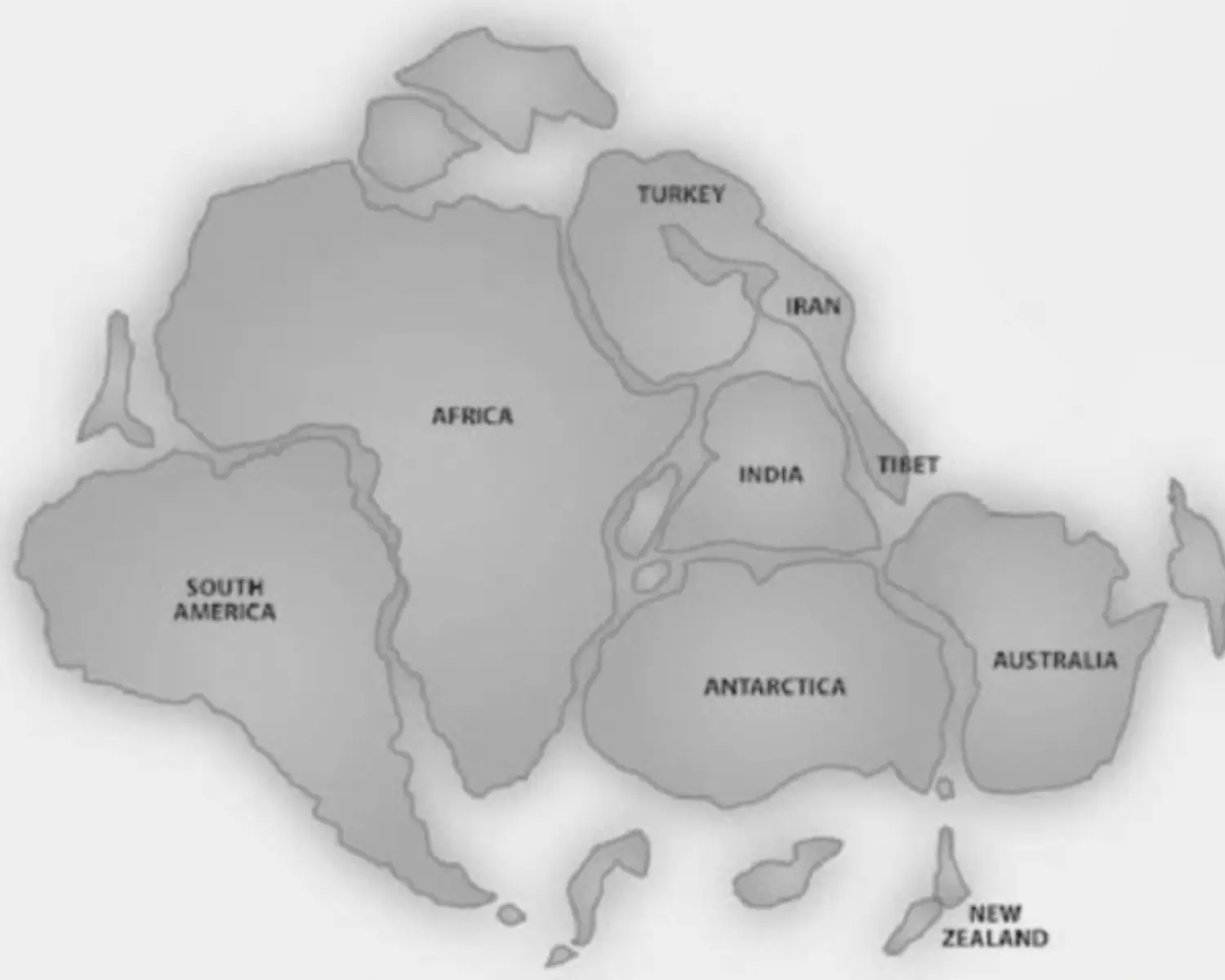
The Big Scrub primarily occurs on rich, basalt-derived soils on the southern flank of the Wollumbin (Mt Warning) caldera. It descended from the ancient Gondwana rainforests and species that trace their lineages back 180 million years, as well as species that migrated from Asia millennia ago.
Home to the richest terrestrial biodiversity in NSW – the third richest in Australia – it’s an ancient, complex ecosystem of immense ecological and cultural value.
BIG SCRUB BEFORE CLEARING
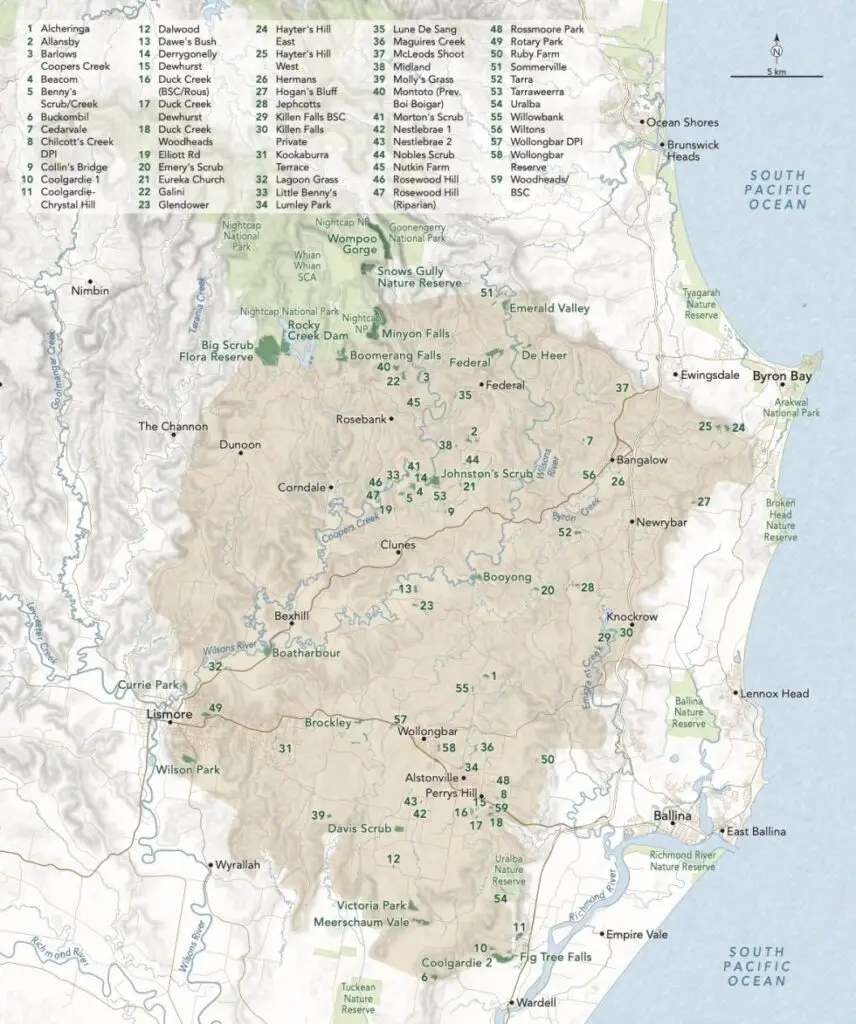
BIG SCRUB AFTER CLEARING
The Big Scrub
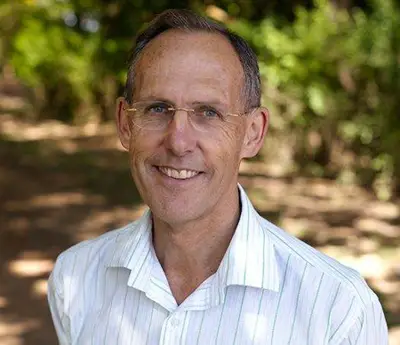
In the words of Bob Brown
“As far as the eye could see, the Big Scrub’s vast green canopy, here and there topped by stately figs and cedars, was enlivened by thousands of brilliant birds wheeling up and descending back into the rainforest amongst the ‘branches festooned with orchids and ferns’. The birds disseminated the seeds of the fruits and so were regenerating one of wild Earth’s most ancient and splendid gardens.
On the Big Scrub’s ferny floor moved dwarf cassowaries, rufus scrub-birds, bower birds, spotted-tailed quolls, red-necked pademelons and, in the streams where the ‘waters gently slid or cascaded over lichen and moss-covered rocks’, cod, platypuses and water dragons.
Tens of thousands of years ago the ancestors of the Big Scrub’s Bundjalung people came to live in this paradise, adding to the seed dispersal which kept it vibrant and one of the most species-rich ecosystems on the planet.
Then came catastrophe.
In the last 40 years of the nineteenth century more than 99 percent of the Big Scrub was cleared and burnt for farming. The Bundjalung were displaced and many species of the rainforest wildlife were extirpated.
Yet, even in the midst of this Big Scrub catastrophe a new and defiant idea seeded in the forest – for its protection and regeneration. In 1892 a first sprig sprouted in the form of a Presbyterian preservationist’s campaign for rainforest at a local waterfall. Soon patches of forest were officially reserved and, in the end, scores of separate, vital remnants survived. Though they are tiny, a scientist describes these remnants as harbouring ‘more Gondwanan rainforest history and diversity in the living flora than any comparable region on Earth’.
Progress in Big Scrub restoration is a wonder to behold. So far 300 hectares in some 300 patches has been re-established.
Along with 3,000 others I turned up at the most recent of 18 Big Scrub Rainforest Days. People were happily flocking there to learn all about the rainforest – including how to replace disused acres of weeds by replanting rainforest trees and understorey, re-introducing wildlife, and deterring feral animals. Above all, I saw the generosity, patience, hard work and happiness which are the hallmarks of this new generation of the Big Scrub people. Their work is boosted by donations from people who cannot be there with sleeves rolled up.”
The Story of the Big Scrub
Australia was covered by rainforest when it broke away from Gondwana. As we drifted north, the climate dried and the rainforest contracted to wet tropic, subtropic and temperate regions – this same rainforest ecosystem lives on today in the Big Scrub.
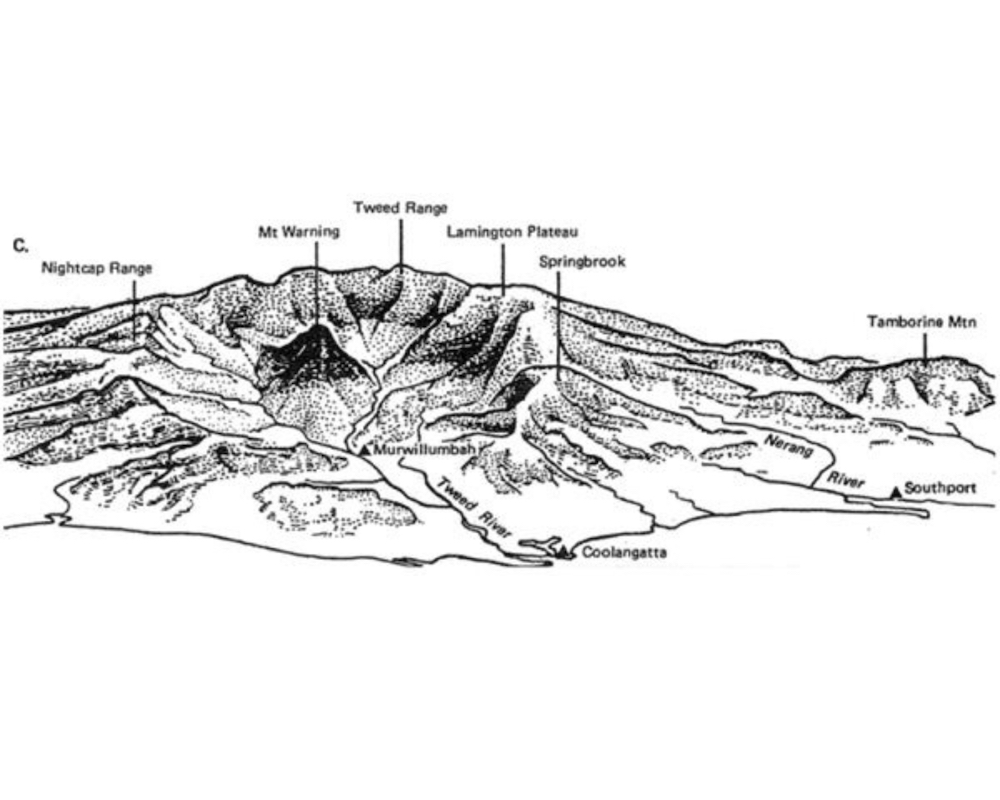
After falling dormant, the Tweed Volcano eroded to leave behind mountain ranges and rich volcanic soil. Rainforest colonised the southern flank of Wollumbin (Mt Warning) and its surrounding lowlands – nutrient-rich soil fuelling the growth of enormous trees and dense vegetation.
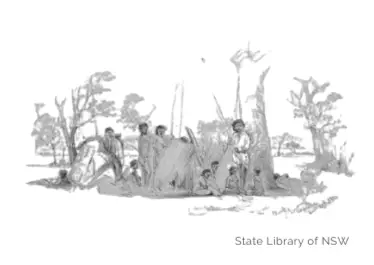
The ancestors of the Big Scrub’s Bundjalung people arrived. Living in balance with the rainforest, caring for the land and adding to the seed dispersal pattern critical for many species to survive.
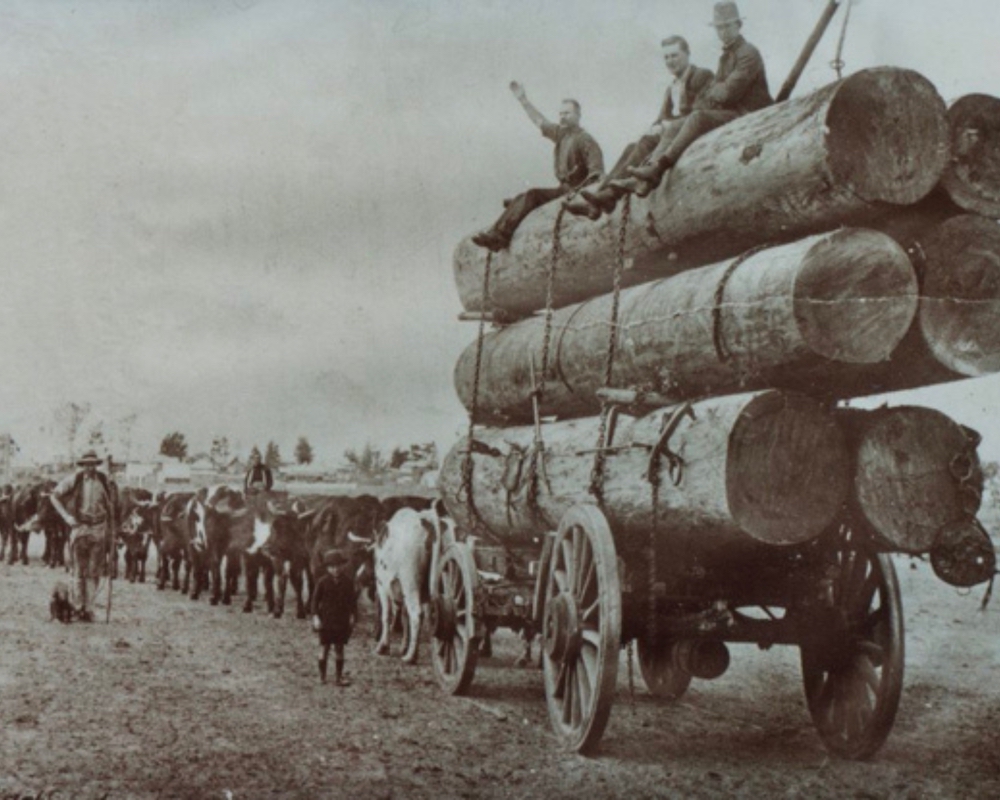
By the turn of the 20th Century, 99% of the Big Scrub had been cleared by European settlers, mostly for logging and agriculture. All that remained were around 80 patches of isolated remnants of rainforest.
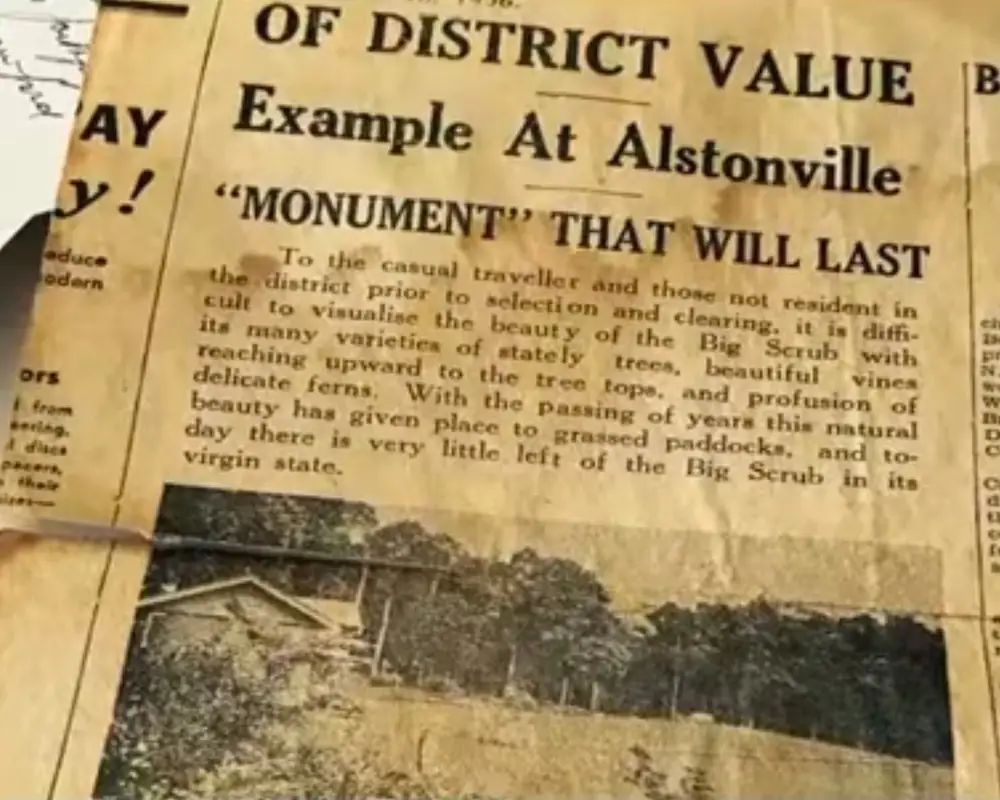
Early conservation efforts began in the 1930s, with the formation of Booyong Flora Reserve and Ambrose Crawford’s work at Lumley Park. These pioneering efforts were built on in subsequent years by the likes of Alex Floyd, Ralph Woodford and Nan and Hugh Nicholson.
Big Scrub Landcare formed to fight continuing deterioration of the remnants. Co-founders Tony Parkes and Mark Dunphy along with over 100 ecologists and landholders became foundation members of the Landcare group.
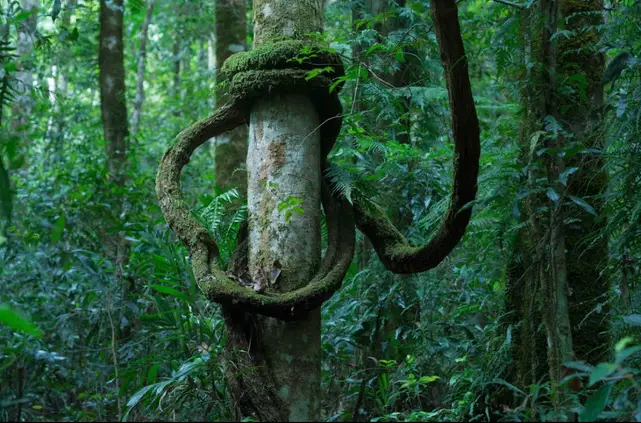
On the initiative of Big Scrub Landcare, the lowland subtropical rainforest of the Big Scrub was listed as a critically endangered ecological community by the Federal Government and endangered by the NSW Government.
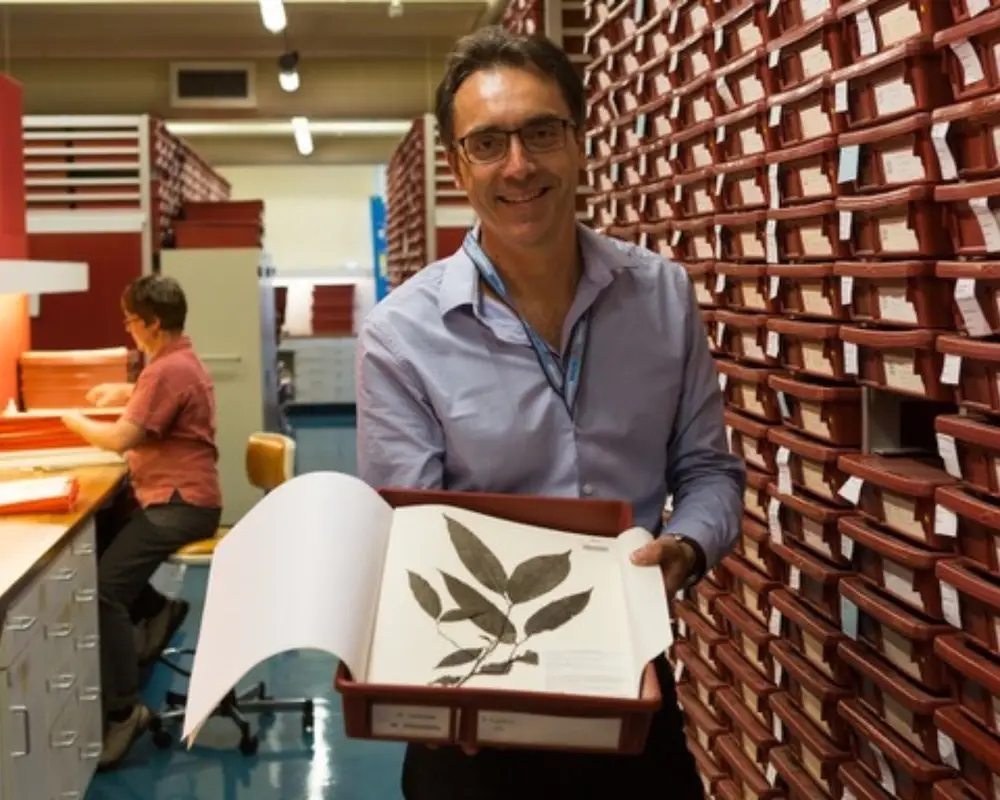
With short-term threats largely under control, Big Scrub Landcare turned its attention to the long-term threat of weak genetic diversity among key tree species in the remnants. We partnered with the Royal Botanic Gardens Sydney and Australia’s leading rainforest geneticists to launch Science Saving Rainforests.
Big Scrub Landcare was renamed to reflect its evolution from Landcare group to Rainforest Conservancy. With 40 remnants under our care, the re-establishment of around 600ha of rainforest, our Science Saving Rainforests program and the support of the community, we continue to care for one of the most precious natural wonders on Earth.
Visiting the Remnants
- Booyong Flora Reserve: covers an area of 16 hectares and was declared protected in 1931. It is located 2.5km south-west of Nashua.
- Victoria Park Nature Reserve: covers an area of 17 hectares and was declared a protected area in 1975. It is located on Victoria Park Road off Dalwood Road in Alstonville.
- Minyon Falls Nature Reserve: covers an area of 112 hectares and was declared a protected area in 1979. The Minyon Falls Nature Reserve is located on Minyon Falls Road, 20 km west of Byron Bay.
- Big Scrub Flora Reserve: covers an area of 196 hectares and was declared a protected area in 1976. The Big Scrub Flora Reserve is located on Gibbergunyah Range Road near Rocky Creek Dam.
- Boomerang Falls Flora Reserve: covers an area of 9 hectares in Whian Whian State Conservation Park. It is located 20 minutes drive from Minyon Falls.
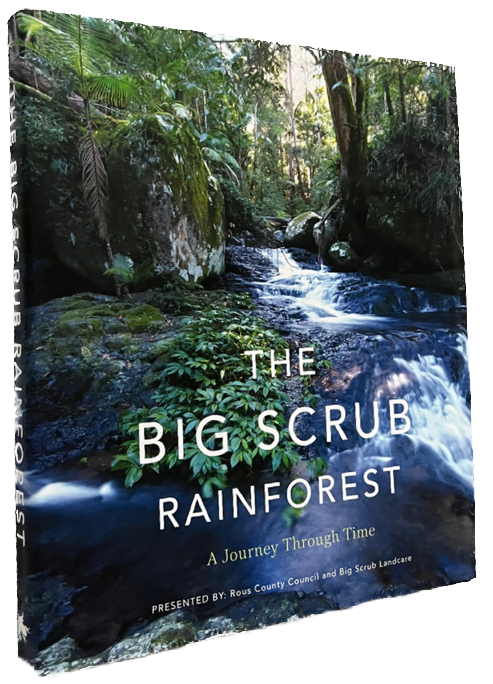
The Big Scrub Rainforest: A Journey Through Time
We also publish, in association with Rous County Council, a beautiful book titled The Big Scrub Rainforest: A Journey Through Time.
Heroes of the Big Scrub
Heroes of the Big Scrub is an inspiring story of the long-term, landscape-scale restoration effort behind the Big Scrub’s ongoing recovery, published and created by the Australian Association of Bush Regenerators. The video showcases the many people who have dedicated much of their life’s work to enabling substantial recovery of this unique Australian rainforest.