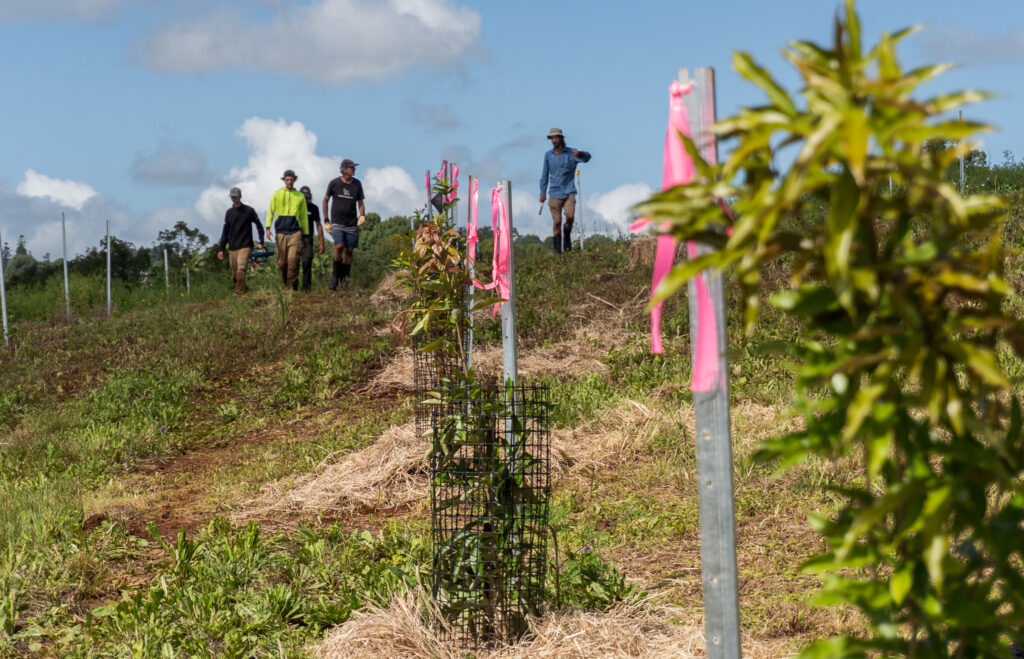
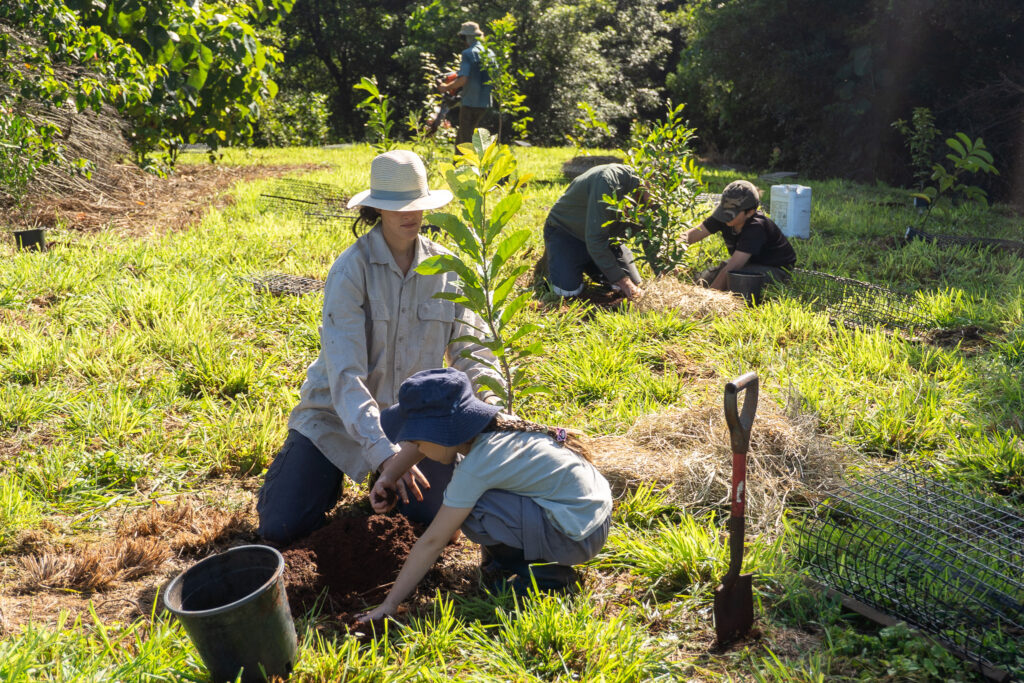
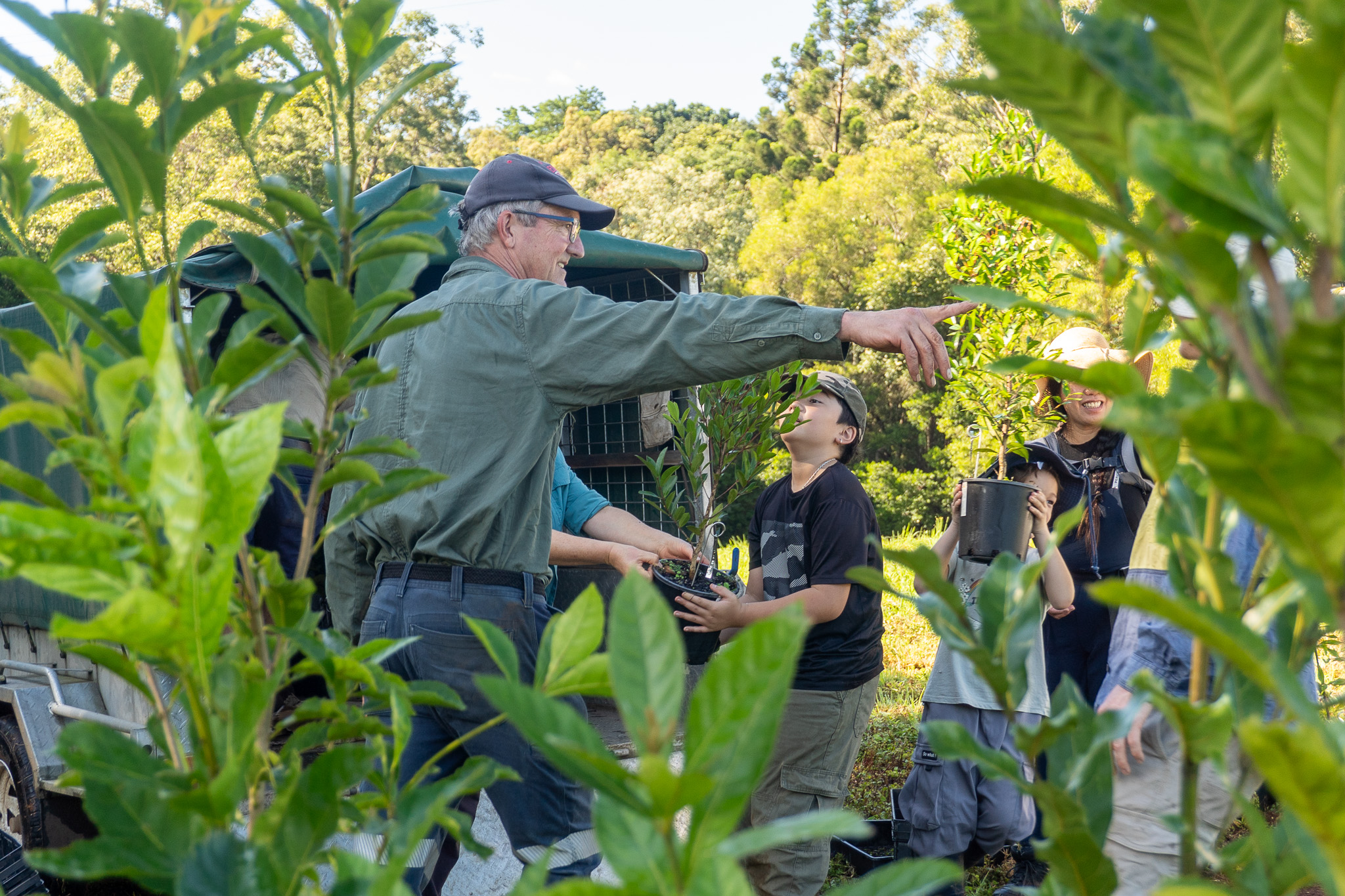
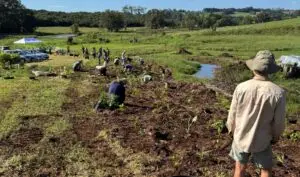
The first planting at the Living Seedbank Plantation was a major milestone for the program.
Developed through years of genetic research, the genetically optimal trees at the Living Seedbank Plantationrepresent the best available combinations to maximise genetic diversity – the key to a resilient ecosystem– within key rainforest species.
The Living Seedbank Plantation is designed specifically for the production of genetically diverse seed, which will eventually supply restoration projects across the region.
The firt planting of genetically optimal trees at the Living Seedbank Plantation in March 2026.
But the Living Seedbank is only one part of the story. At the same time, we have genetically optimal trees being planted elsewhere and assigned a slightly different mission…
What Are The Science Saving Rainforests Demonstration Restoration Sites?
Since the landmark planting in March, three additional plantings of genetically optimal rainforest stock have taken place across the Big Scrub region, marking an exciting step forward in the mission to restore genetic diversity to one of Australia’s most fragmented rainforest landscapes.
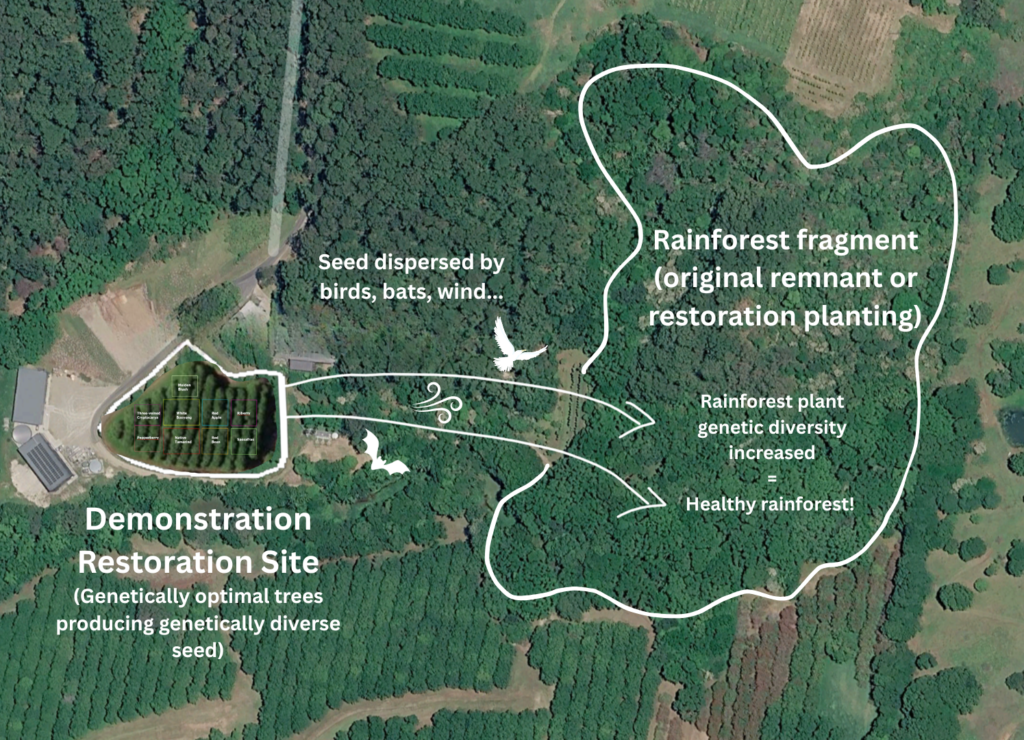
Rather than functioning as seed production plantations, these sites are intended to return genetically diverse trees directly into the landscape in what we are calling the Demonstration Restoration Sites.
A total of four demonstration restoration sites have been strategically selected. They are:
Distributed across the historic Big Scrub landscape
Positioned close to existing rainforest fragments
Designed to strengthen connections between isolated fragments across the region
As the trees mature, birds, bats and wind will help spread seed into surrounding rainforest remnants and other restoration areas. Over time, this natural movement of seed has the potential to strengthen rainforest populations across the landscape and help isolated fragments function more like a connected ecosystem.
So unlike the plantation, seed will not be harvested from these sites. Instead, the goal is natural dispersal through the landscape.
The sites are scientifically designed to demonstratehow to integrate genetically optimal trees into restoration plantings. They’re not any old trees. The trees are the result of careful selection and propagation to representas much local genetic diversity within a species as possible.
Thereforeit’s important for them to cross-pollinate with each other, and keep up genetic mixing.
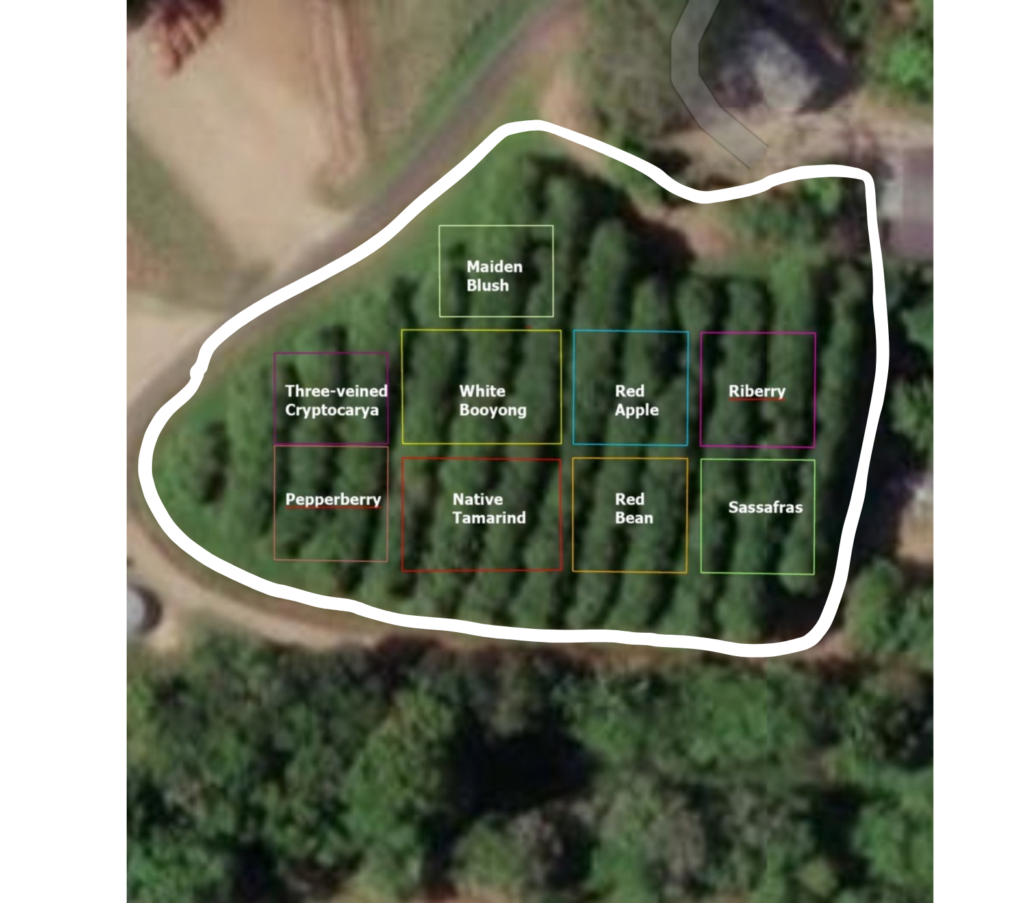
Like the Living Seedbank Plantation, individuals of the same species are planted in carefully arranged blocks to encourage cross-pollination and maximise opportunities for gene exchange.
But what are they 'Demonstrating'?
This diagram depicts the plans for the conversion of a macadamia orchard into a Demonstration Restoration Site. Species are planted together to facilitate cross-pollination.
So, while the Living Seedbank Plantation uses genetically optimal trees to produce seed to grow into more trees for use in restoration, the Demonstration Restoration Sites in the meantime are already allowing the spread of genetically diverse trees into the landscape as well as acting as a blueprint for how to plant genetically optimal trees effectively.
So far, three new demonstration restoration sites have been established, one near Clunes, Dalwood and another near Minyon Falls. An additional site is planned near Hayters Hill.
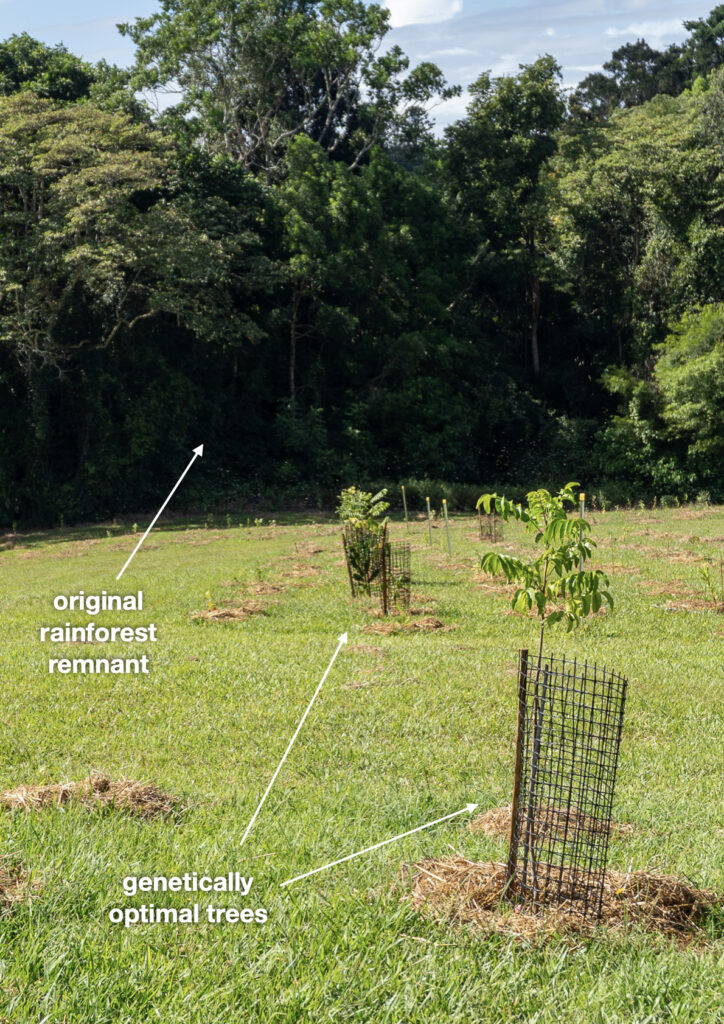
A Demonstration Restoration site near Clunes: genetically optimal trees are planted next to a Big Scrub remnant.
What began as a world-first effort to identify the genetically optimal trees for rainforest restoration is now becoming a living network across the Big Scrub.
Each new planting increases the program’s capacity to restore genetic diversity, strengthen ecological resilience and create healthier rainforest ecosystems for future generations.
Genetically optimal tree planting near Minyon Falls.
While the first planting at the Living Seedbank Plantation marked the beginning of this journey, the establishment of Demonstration Restoration sites across the landscape signals something equally important: genetically informed restoration is no longer a future vision.
It is now taking root across the Big Scrub.
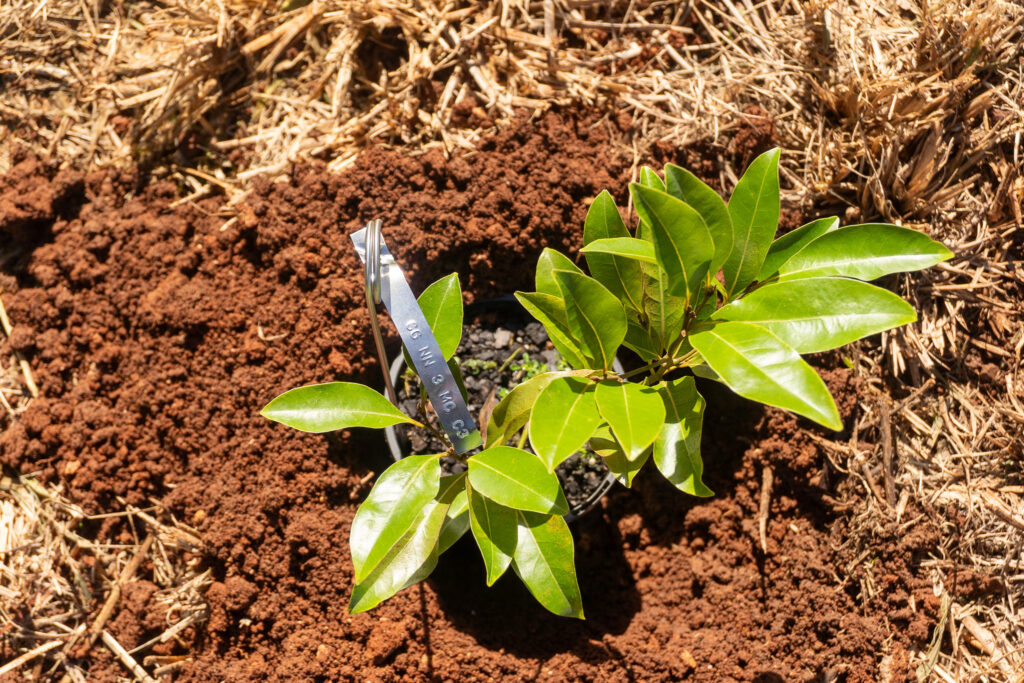
Each genetically optimal tree has a code linking it to valuable metadata about the original parent tree it was propagated from.
Dive deeper into the methodology behind the entire Science Saving Rainforests Program here.
Science Saving Rainforests is a forward-thinking approach with a long-term vision that requires continued support to realise its full potential.
By supporting Big Scrub Rainforest Conservancy, you’re not only helping regenerate the Big Scrub, but supporting a methodology that could help restore fragmented ecosystems everywhere.
We would like to thank the NSW Government (Saving Our Species Program and Environmental Trust), Big Scrub Foundation, the Rekindle Foundation, NPWS and our amazing community for their support for the Science Saving Rainforests Program.