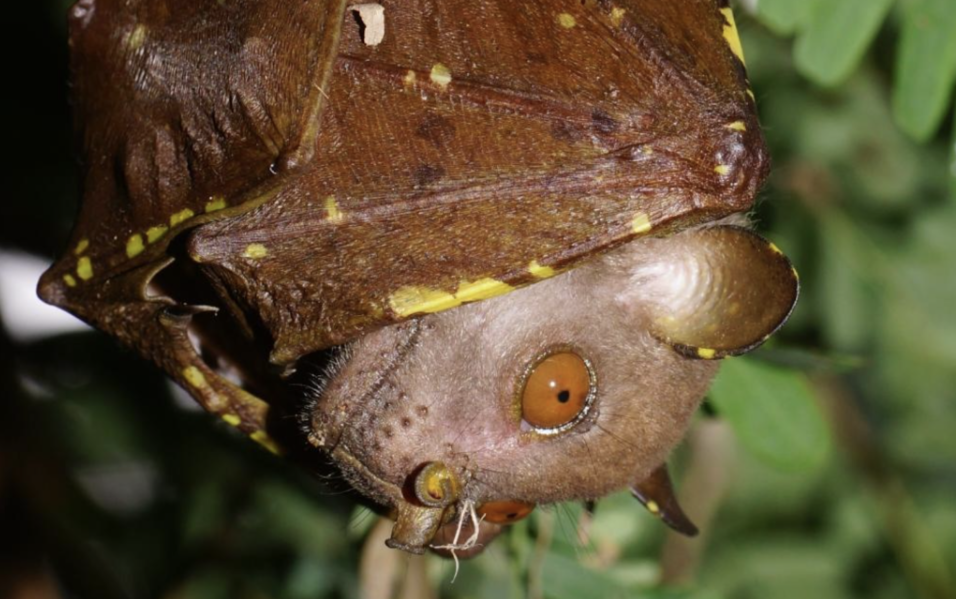
In our last newsletter, ecologist Georgia Beyer introduced us to the Eastern Tube-nosed Bat (Nyctimene robinsoni) and teased us with some exciting insights about its return to the Big Scrub. Now it’s official, as a new paper has been published in Australian Zoologist.
Led by David Milledge and Georgia Beyer, acoustic surveys as part of our bioacoustic bird monitoring project detected the species at 11 Big Scrub remnants and restoration sites, including locations more than 25 km from its core habitat in the Nightcap Range. The bat was detected at all but one of the surveyed sites, demonstrating its ability to move across a fragmented landscape, including gaps of up to 6 km.
Importantly, bat activity was highest in larger, better-connected areas of regenerated vegetation, highlighting the value of revegetation and habitat connectivity. The findings provide another indication that decades of rainforest restoration are helping reconnect the Big Scrub and support the return of wildlife.
For a landscape that has lost more than 99% of its original rainforest, these unexpected signs of recovery are something worth celebrating. A reminder that every restored patch can become part of something much bigger.
Want to read the paper? Visit Australian Zoologist or email info@bigscrubrainforest.org to request a copy of the full article.
The bioacoustic bird monitoring project is made possible thanks to the Rekindle Foundation.
Photograph courtesy of Reiner Richter.