by Babette Weatherell |
“A lot of it is just listening.”
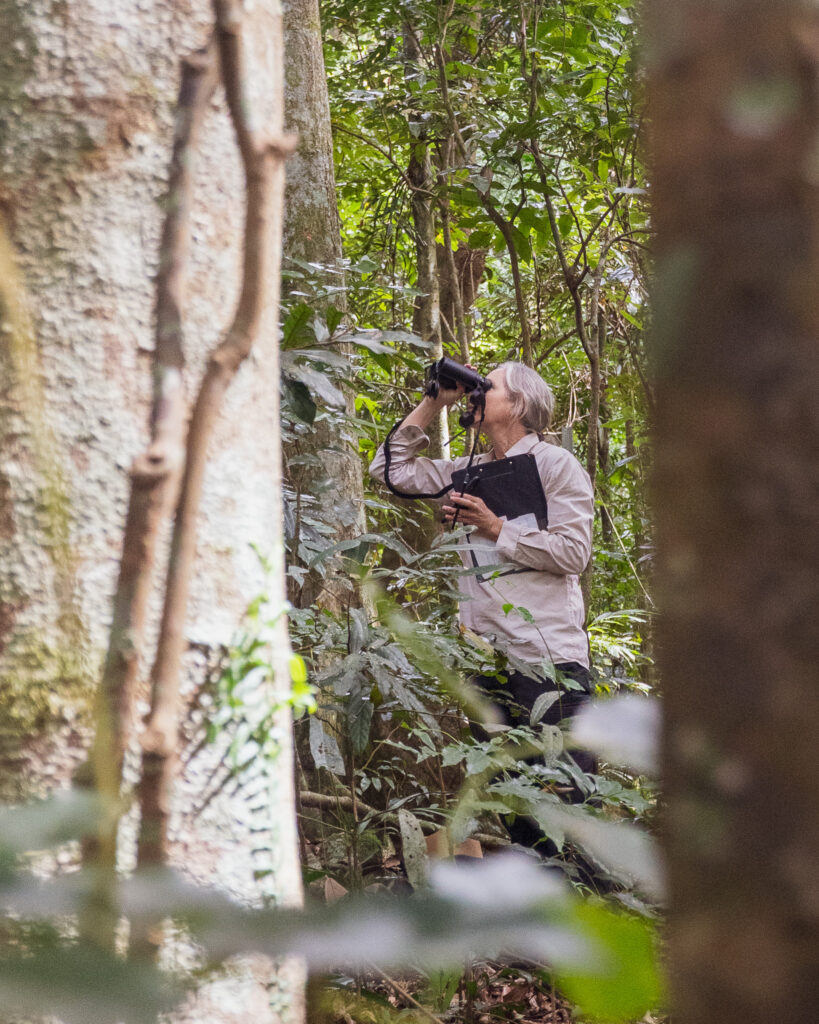
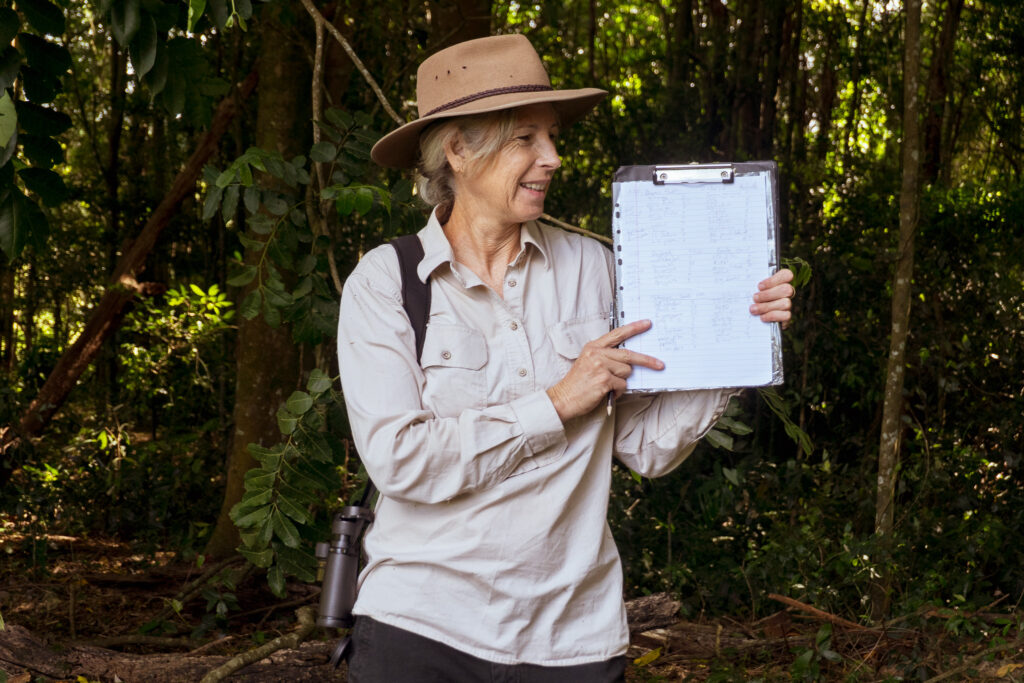
Clipboard in hand, binoculars slung on her shoulder, khaki button up – the true picture of a bird ecologist out in the field.
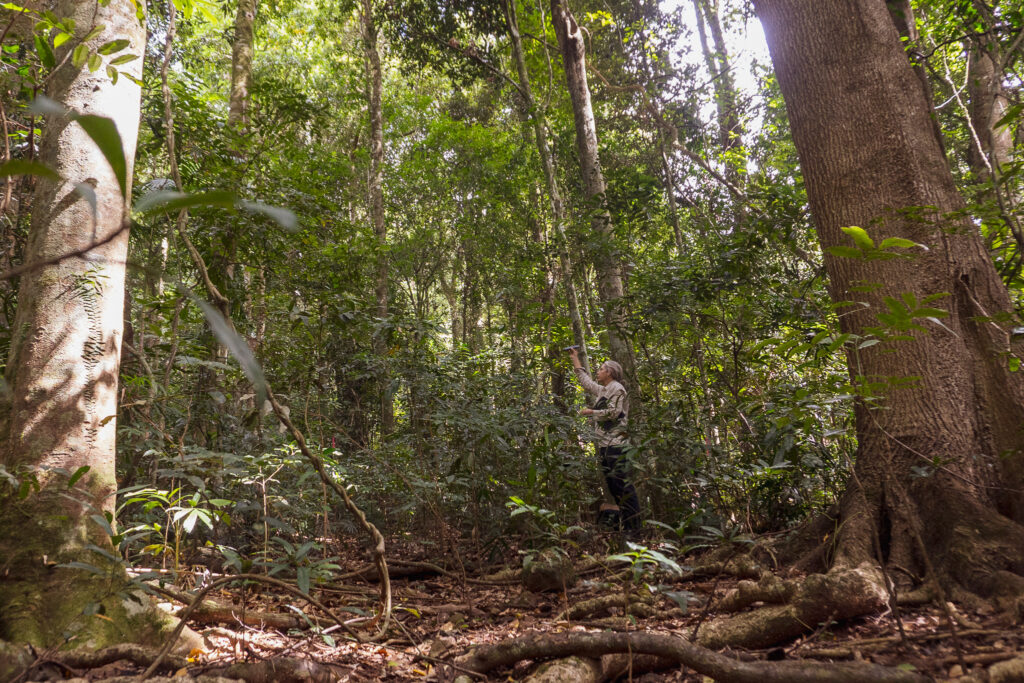
Georgia looks up towards the canopy, scanning the twinkling green constellation above.
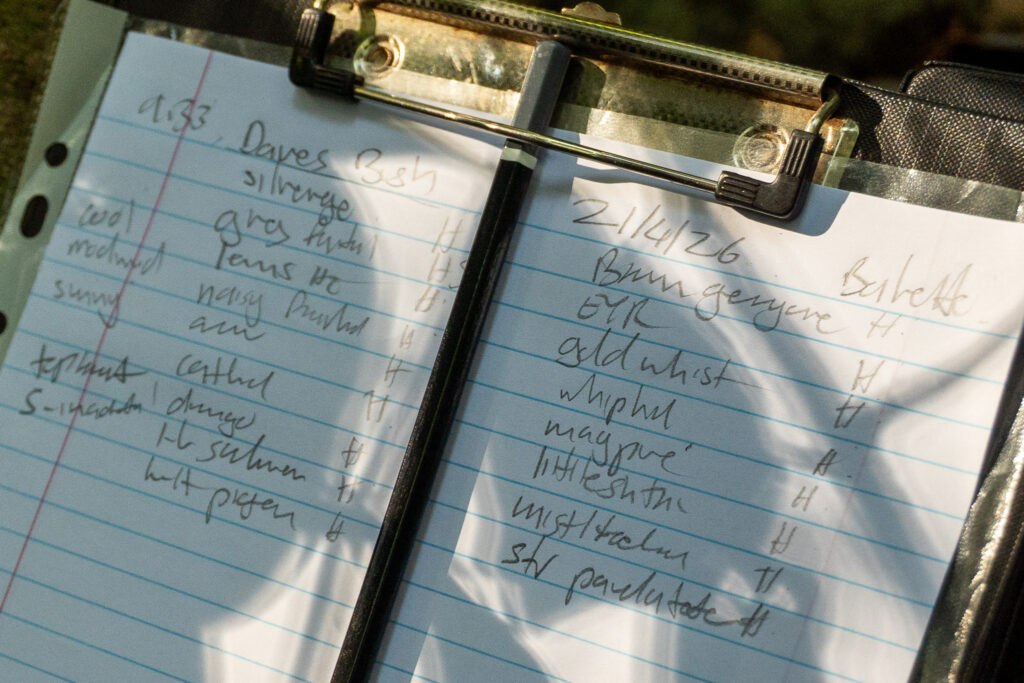
She’s looking but the real work is tuning in to the scattered symphony of bird calls that surround us. She picks up her pencil and scribbles,
brown gerygone
I perched myself on a rock and settled in, thoroughly starting to enjoy the initial thirty minute observational survey that Georgia conducts every time we arrived at a new site that day to install the acoustic recording units. Half an hour to sit and listen, and become enveloped by the rainforest.
The project is currently in its third year, including the initial pilot study.
And it’s already yielding remarkable and unexpected results, such as the return of the Eastern Tube-nosed Bat to remnants and restored Big Scrub rainforests.
Another insight: the youngest restoration site has so far recorded the highest bird species richness (the most different types of birds) – likely due to its diverse mix of habitats, including bordering paddocks, nearby forest and a flowing creek.
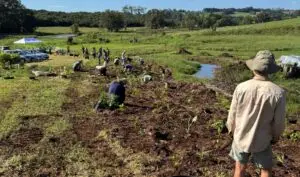
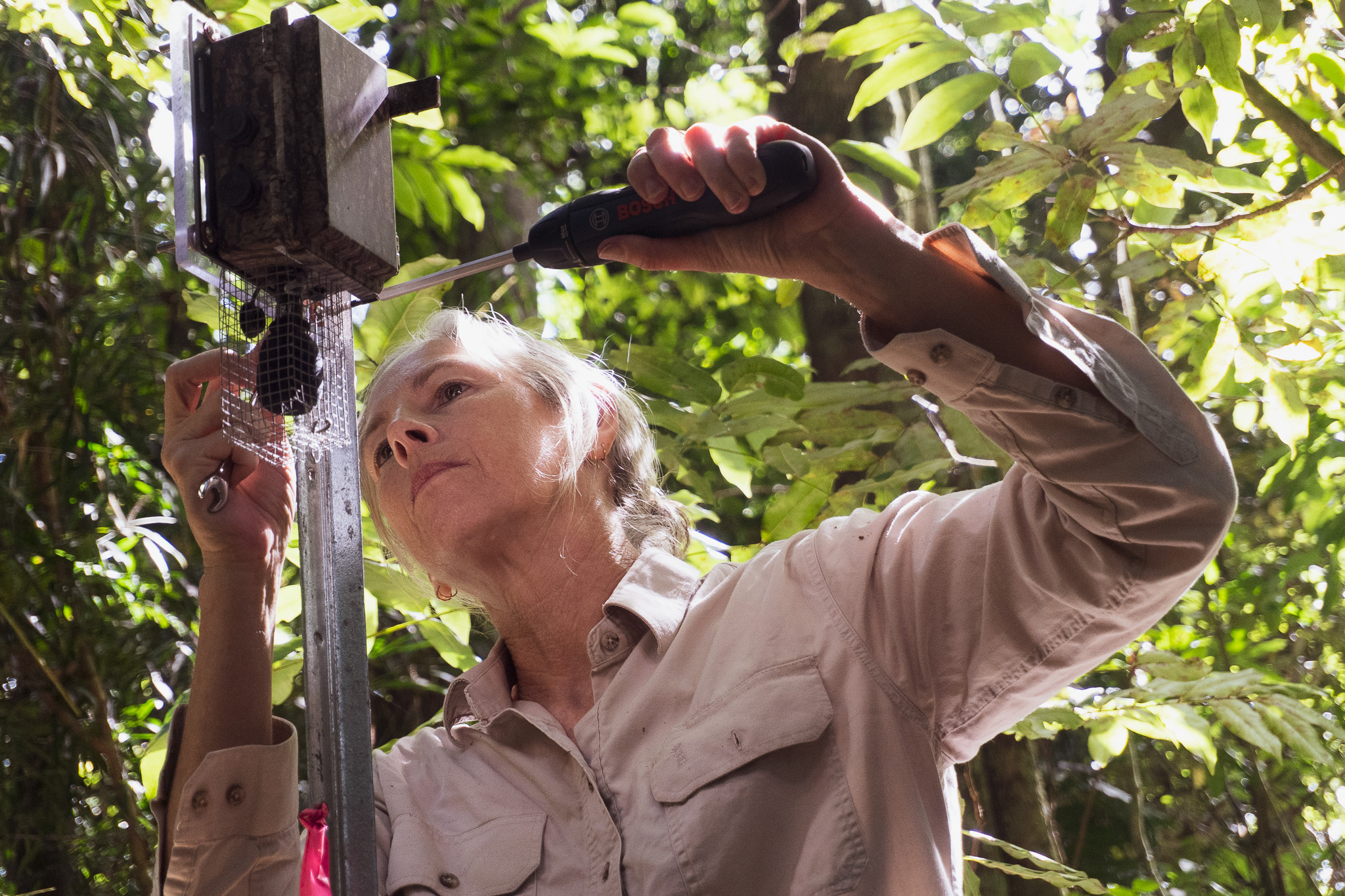
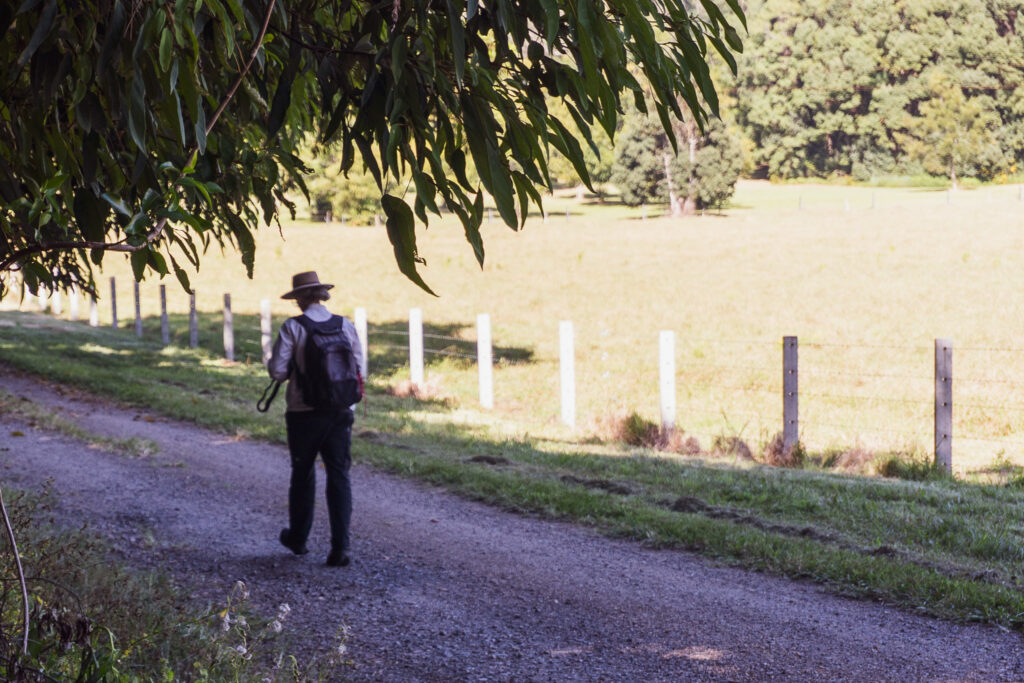
Bird monitoring sessions take place over 4 weeks in each season. Pictured here is Georgia, setting up the recorders for autumn.
The project runs across 12 monitoring sites altogether, sampling from Big Scrub remnants of varying size and isolation as well as restoration sites ranging from young stands of about 5 years of age to more mature 15 year old patches.
“Yes!”
Georgia noticed a flock of dark grey birds cruise over above the canopy.
topknot pidgeons
“They don't have a distinct call and aren't picked up by the recorders so if I can spot them on site, I can add them to the list.”
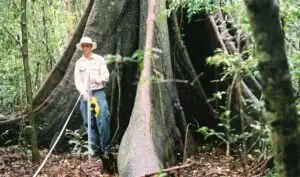
We’re in Dawes Bush, a Big Scrub remnant of 10-acres in the Eltham Valley. The century old red cedars within this forest stand as quiet survivors. The remnant fortunately fell into the hands of the Lennon family who since the 90s have nurtured it from the brink, using a variety of restoration techniques.
Camphor laurel conversion has proven particularly successful in expanding the remnant – whereby the skeletons of the poisoned trees provide structure to support birdlife and the valuable services they provide in introducing seeds of pioneering native rainforest trees. The camphor, once a taker, learning to give.
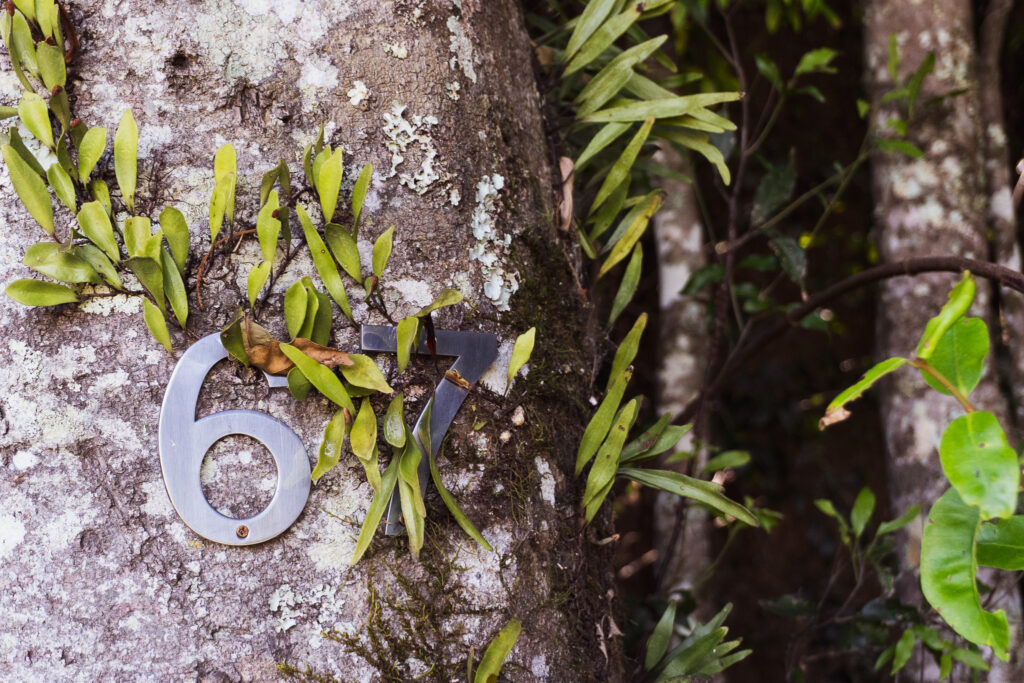
We make the short bushbash back, past the house number slowly being swallowed by the tree it’s nailed to, and like stumbling out of the closet from Narnia, we’re transported back to the present day surrounded by dry paddocks and unsuspecting cows.
The intention of the project is to better understand bird species present in the Big Scrub.
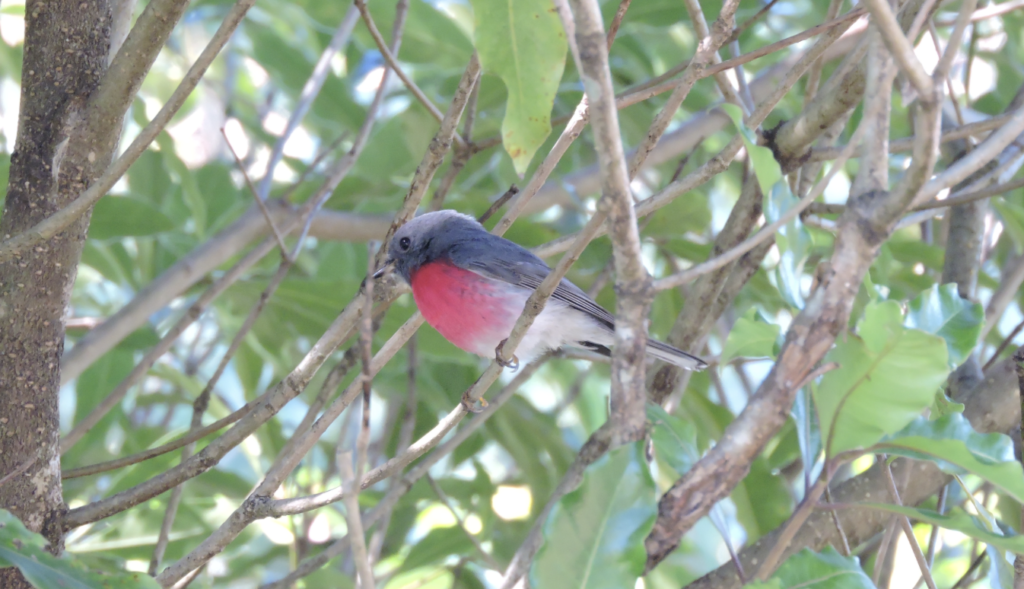
This will create a baseline study to track the progress of birds returning to the forest patches as they expand, mature and reconnect. The survey is a roll call marking who is here and who’s return we are awaiting.
The last and only time any similar systematic survey was done here was around 40 years ago. With the advent of technology for audio analysis, the current study will provide much more depth and accuracy.
Georgia has a noticeable glimmer at the thought of being able to compare results over such a long time frame.
On one of the particularly long bush-bashes into a site, as we dodged wait-a-while vines and stumbled over roots, she explained where she had come from.
Originally from countryside Victoria, Georgia studied Computer Science.
"I thought I needed to do something intelligent and that would make money."
Though it was interesting, it didn’t quite fill her cup. She went travelling, ended up in the Northern Rivers and became a native forest activist.
“I used to have a head full of dreads. I remember going to a forest blockade, and coming towards us was a man carrying a spotted-tailed quoll in a cage trap*. And that’s how I met David.”
*The quoll was part of a survey he was doing to study the significance of that particular forest.
David Milledge, a passionate ornithologist, helped inspire Georgia to follow a path in ecology and remained an important figure in Georgia’s career.
“One day he called me up asking if I was interested in working on a bird monitoring project he’d been asked to do, so I jumped at the opportunity.”
In The Studio
I had heard stories of the hours spent listening to and analysing all the data and wanted to see for myself the bat cave where all the auditory magic happens.
I’m not sure what I was expecting but it definitely wasn’t the cute little pink nook we walked into.
There’s mountains of recordings to go through so if you’re going to resign yourself to hours scrolling through black and white spectrograms, at least make the space contrast.
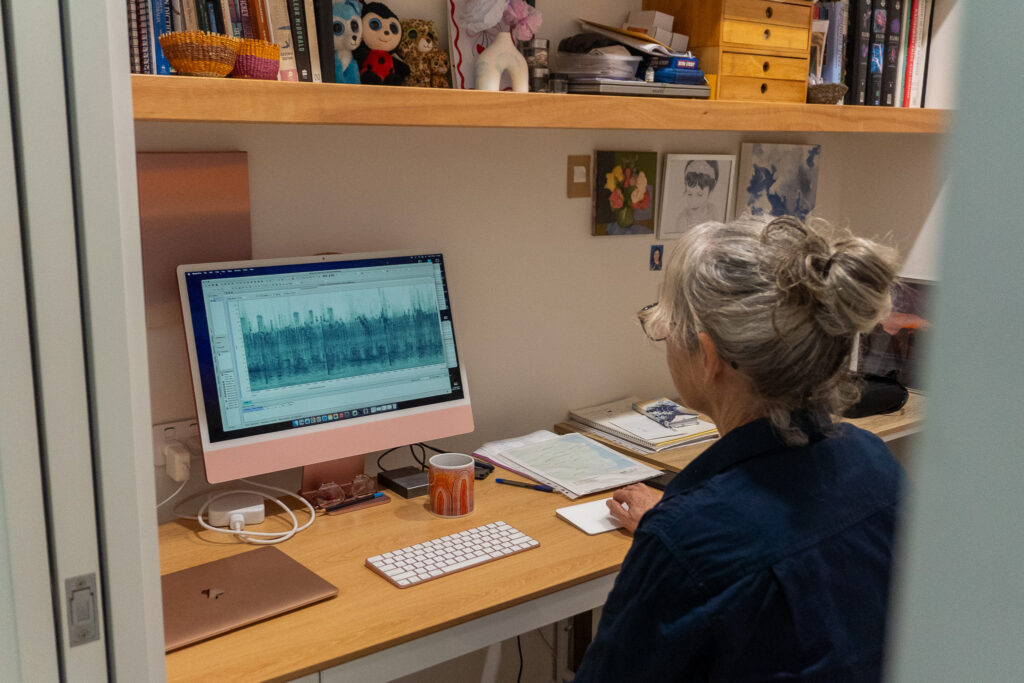
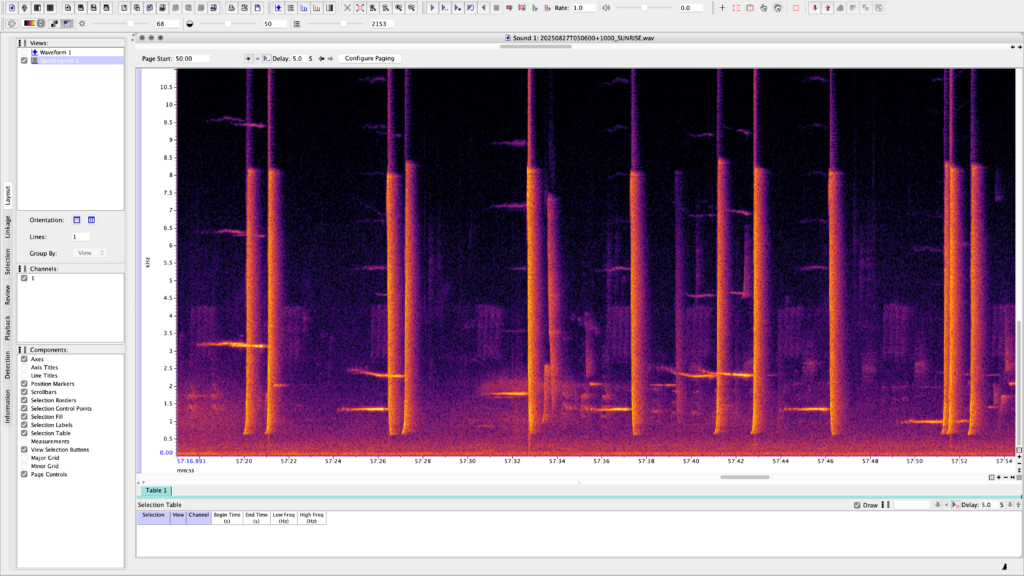
2 hours at dawn, 2 hours at dusk and at multiple 10 minute intervals throughout the day and night: each recording is accompanied by a spectrogram, the visual representation of the birds’ calls, and it’s like birdwatching from a different perspective.
Georgia can recognise a bird from the shape it’s call makes on the spectrogram, before even hearing it, and there’s a little rush of excitement when she sees a shape coming she doesn’t recognise. Using visual identification of bird calls from the spectrograms makes the process efficient and accurate.
There is of course software available to analyse bird calls; it’s not perfect but is used to complement the bird lists created from manual listening to selections of the recordings.
While the project reveals that there’s so much promise and value in newer restoration sites, the fact remains, however, that our specialised rainforest birds need the older sites – in case we needed another reason to take care of our few scattered original remnants of the original 75,000 hectares.
Every returning call, every rediscovered species, is proof that restoration works. These recordings are more than data. They are evidence that when people invest in restoration, wildlife returns.
And behind every spectrogram and birdcall is someone listening closely: Georgia, working quietly and tirelessly so the recovery of the Big Scrub does not go unheard.
The bioacoustic bird monitoring project is made possible thanks to the Rekindle Foundation.
Photography courtesy of Babette Weatherell.