By Ken Dorey |
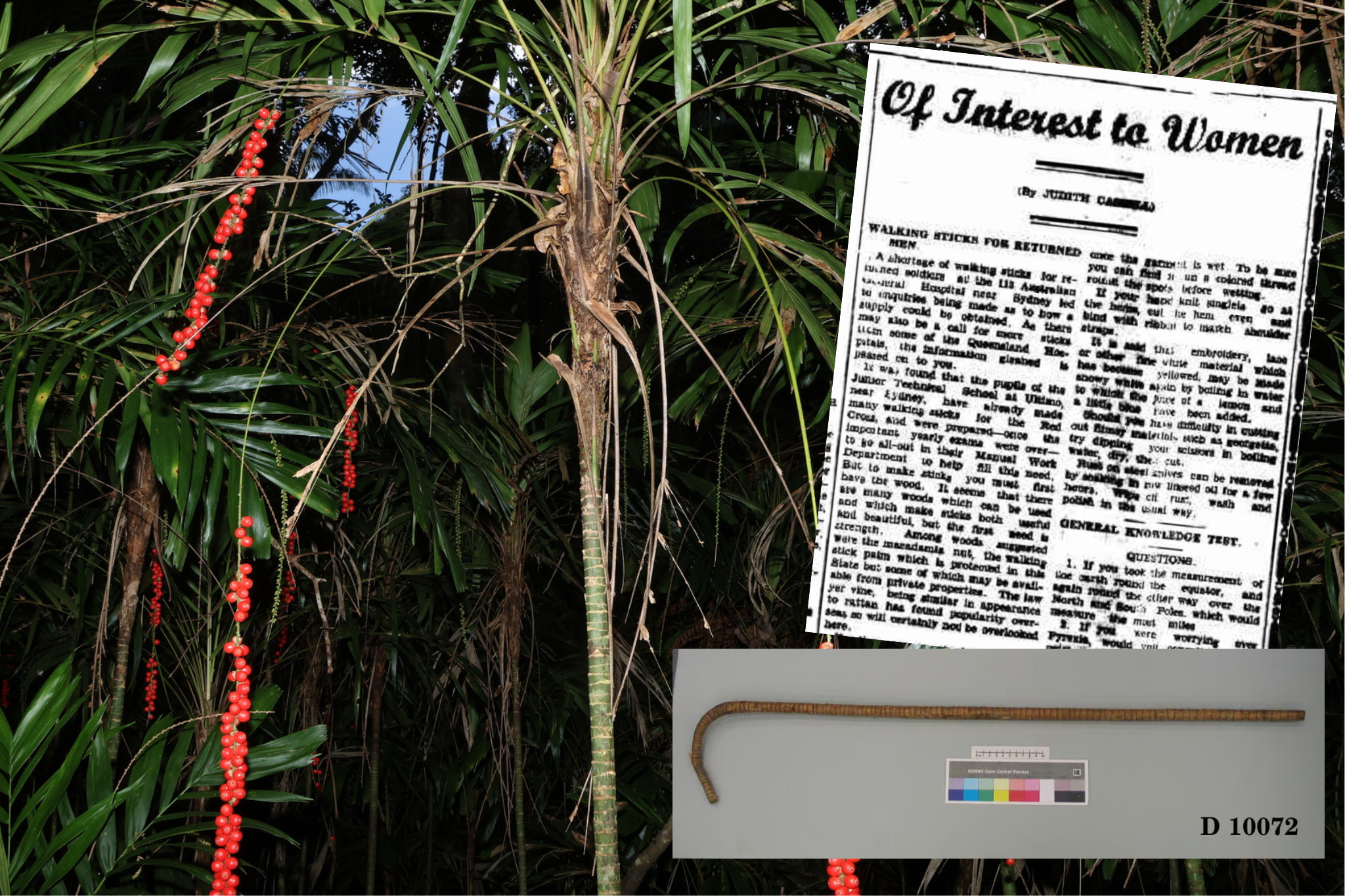
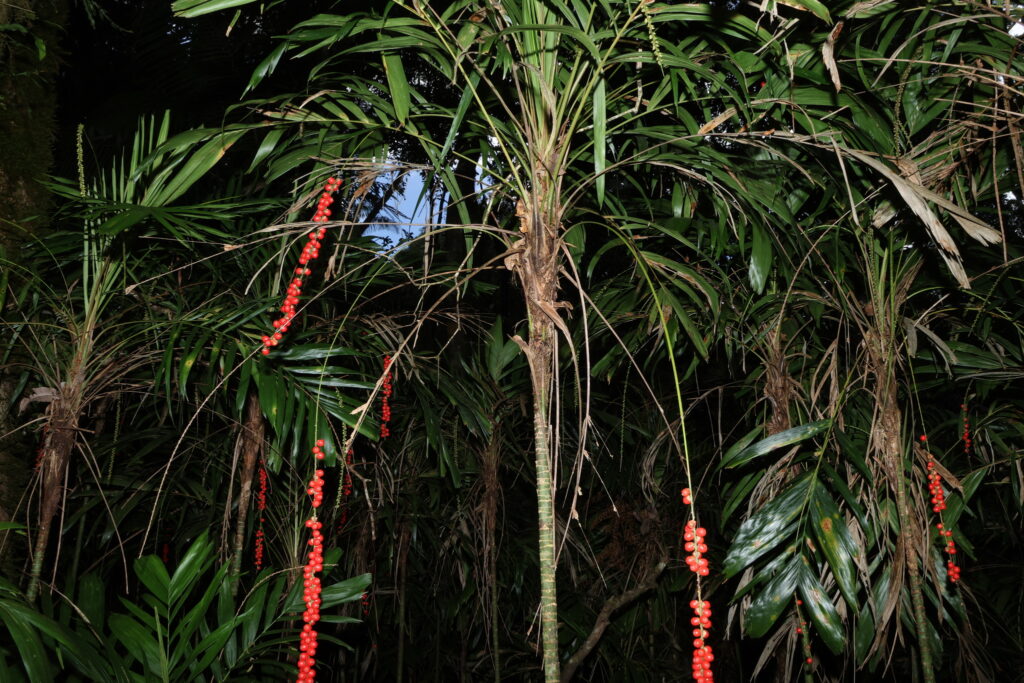
One of the most beautiful understorey plants in the Big Scrub is the Walking Stick Palm (WSP) or Midgimbill.
According to the Sustainable Gardening Australia, it’s a slow-growing delicate palm, found between Taree and Gympie, that has an edible red fruit when fully ripe.
“The plant’s common name comes from the strong straight stem which remains consistently around 3cm and was harvested post-World War 1 to make walking sticks for returned wounded soldiers. A comfortable hand grip was carved from the compact root ball found at the base of the stem. Indigenous people are said to have used the stem for a spear and fishing rod and stripped the leaves and used the fine lining as string.”
Pretty and useful for sure, but I’ve wondered just how often the WSP was, in reality, used for a walking stick?
According to old newspaper articles that I could find the WSP was first mentioned in 1866 as part of a Clarence River display in an upcoming exhibition. It seems the WSP was well-known as a “walking stick” palm as early as the 1860s.
Indeed, in 1871, The Sydney Advertiser specifically wrote,
“the walking-stick palm from the Richmond and Clarence River brushes is one of our most handsome native species and a very elegant plant…the stems are much sought after for walking-sticks and umbrella handles”.
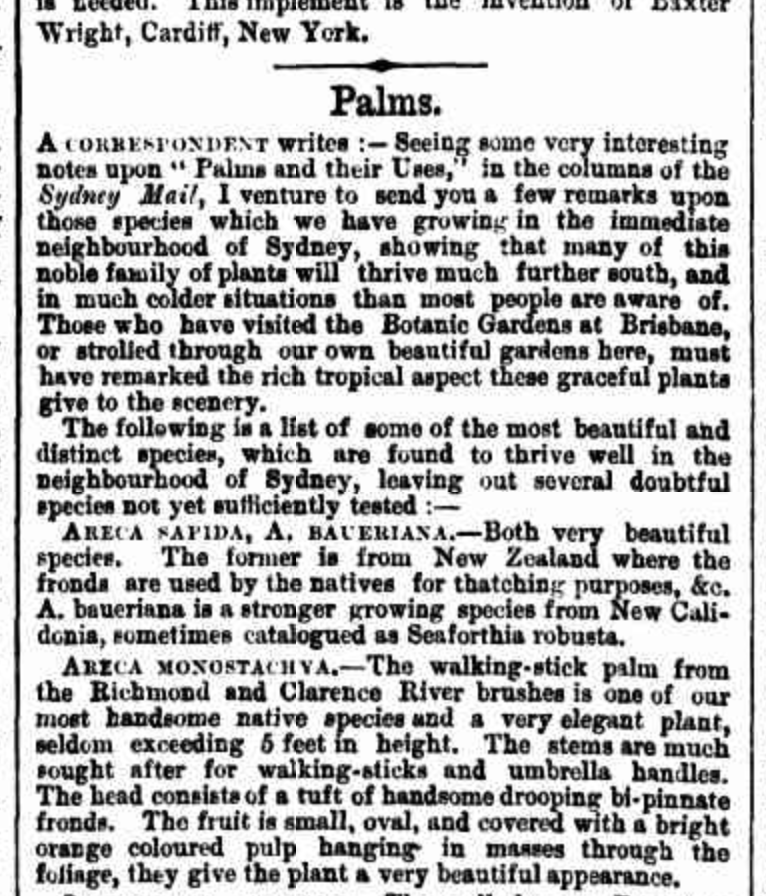
To this point, a Mr J Maiden, in an Agricultural Gazette 1894, actively solicited the public in beginning a “New Industry – Walking Sticks and Umbrella Handles”
He lamented that “although we import a very large number of finished sticks, our quota to the world’s supply of raw sticks is mainly limited to a few Mitchenbills or Walking-stick Palms”.
Mr Maiden wrote to an English firm, Howell and Company, and asked what stick characteristics would suffice for their needs.
They were excited to get the request then offered that
“from time to time we have seen sticks from the different colonies of Australia, and there has been a considerable quantity of one or two varieties sold in this market, the principal one being the midgeon cane, which came from the neighborhood of Brisbane… but none of these canes seem to have met with any success beyond the Midgeon, and unfortunately this has gone completely out of fashion”.
So, is the ‘Mitchenbill’ and ‘midgeon’ our Midgimbill? Possibly, considering the Lawyer Vine is later described as the Loya.
It appears that the WSP may have been used for canes and handles in the late 1800s when walking sticks, umbrellas and parasols were as much fashion as purposeful. Unexpectedly, I couldn’t find WSP references through the WW1 and post-WW1 period.
The next WSP appearance of note in the literature was in The Examiner, March 1937, where Mr J Binstead, a survivor of the Stinson plane crash in the MacPhersons Ranges, recounted the ordeal.
“For food all I could get was small red berries, which the bushmen tell me were from midginbill palms. I did not know whether they were poisonous or not, but they tasted sweet, so we took the risk. After a few days my hands became so numbed and powerless from the thorn scratches that I was forced to carry these berries back… in my mouth… I don’t think they did us very much good, but they did no harm.”
The article stated,
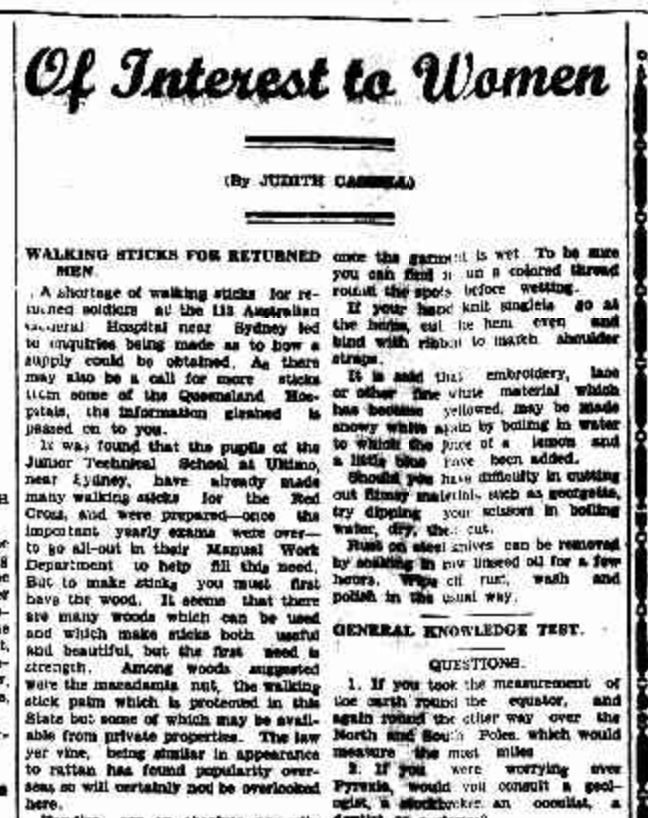
“A shortage of walking sticks for returned soldiers.. led to enquiries being made as to how a supply could be obtained… pupils of the Junior Technical School at Ultimo have already made many walking sticks for the Red Cross… but to make sticks you must first have the wood… it seems that there are many woods which can be used… among woods suggested were the macadamia nut (and) the walking stick palm”.
As far as walking sticks for injured soldiers, I did find a newspaper article in 1942 entitled Walking Sticks for Returned Servicemen.
So the WSP is very pretty, edible, useful and with a story to tell. It is available from most rainforest nurseries and would make an excellent addition to your plantings or garden.
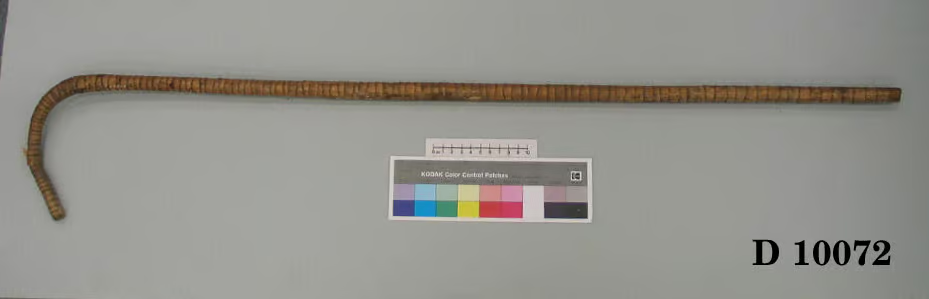
Curious to know what these walking sticks looked like? The closest we could find was this walking stick made from Kentia palm within the Powerhouse Collection in Sydney.
Cover photograph © Adrian Gale