By Georgia Beyer |
An unexpected highlight from our Big Scrub Acoustic Bird Monitoring Project is the discovery of Eastern Tube-nosed Bats (Nyctimene robinsoni) across remnants and planted rainforests of the Big Scrub area. Eastern Tube-nosed Bats belong to the same family as flying-foxes, but they are small enough to fit in the palm of your hand.
Eastern Tube-nosed Bats occur from North Queensland along the east coast down to Alstonville in north-east New South Wales. In NSW they are listed as a threatened species under State legislation, with only around 40 records for the State, located mostly in lower elevation rainforests around the extensive forested tracts of the Border, Nightcap and Richmond Ranges. Although there is a record of an Eastern Tube-nosed Bat from Victoria Park Nature Reserve in the southern part of the Big Scrub area, they haven’t been recorded as occurring in any of the other Big Scrub rainforests. Until now.
We have a series of bioacoustic recorders set up in rainforest remnants and planted rainforests across the Big Scrub, remotely capturing the calls of birds that are later analysed to identify the species. The recorders also allow us to detect other types of forest fauna, and we have identified Eastern Tube-nosed Bats by their distinctive calls in all our monitoring sites. Contrary to earlier understanding of their behaviour, we are also recognising their calls in the cooler months of winter, well outside their accepted period of activity, as previously they were thought to go into torpor or ‘hibernation’ at this time.
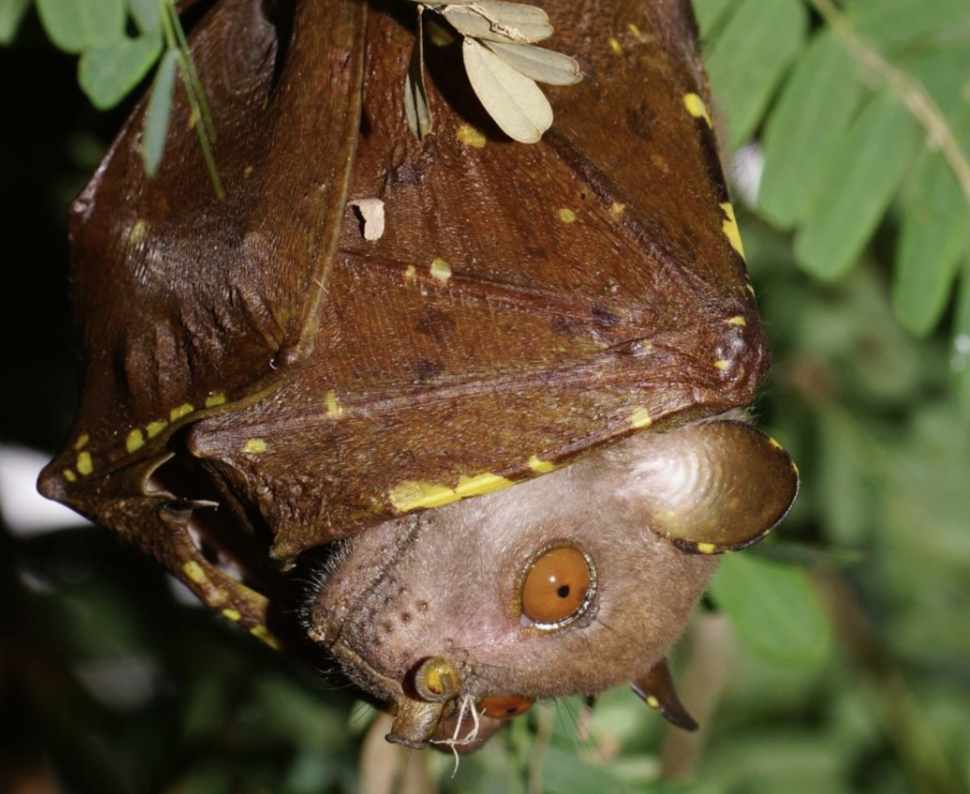
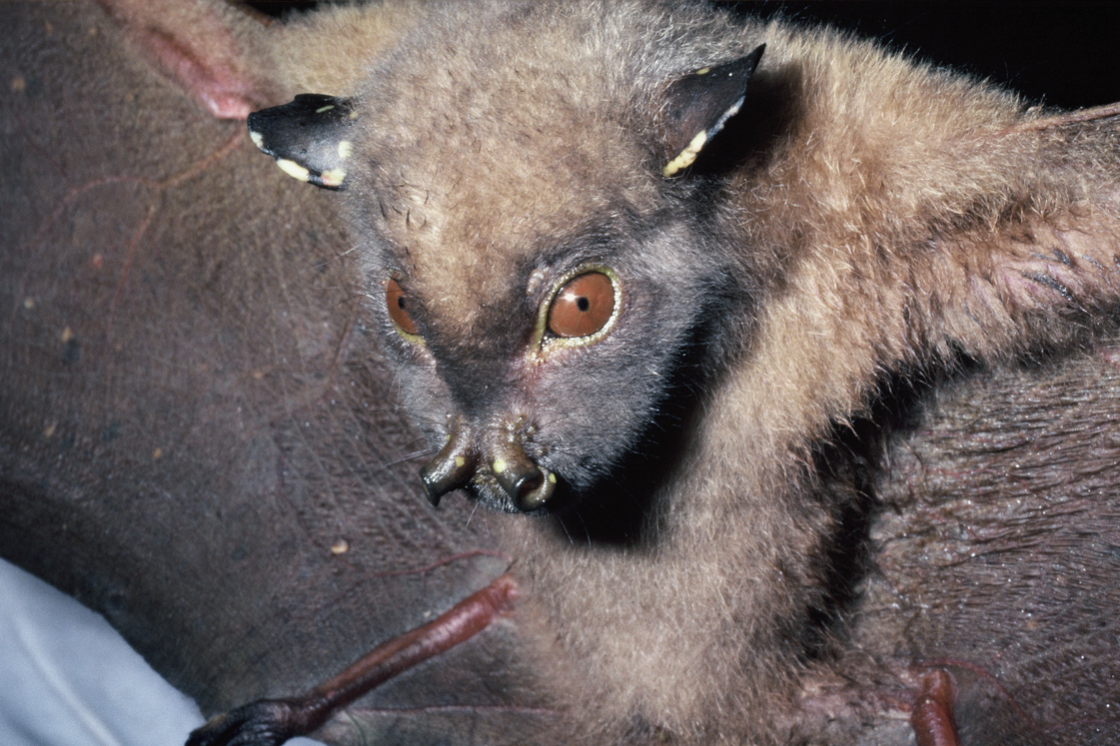
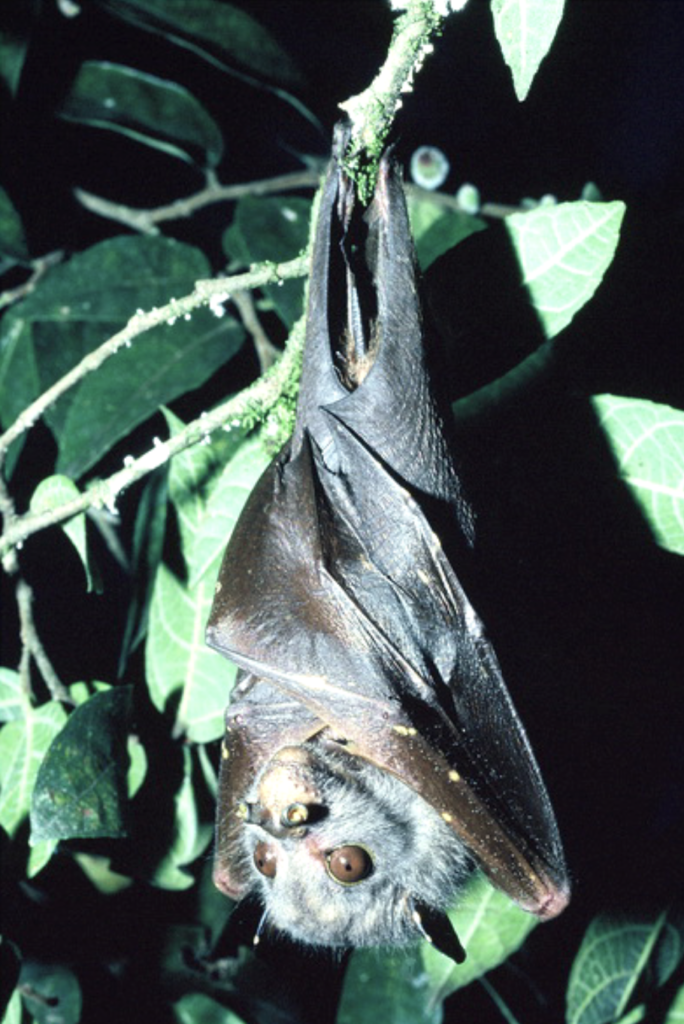
Eastern Tube-nosed Bats are fascinating in so many ways. They have small yellow to yellow-green spots speckled over their brown bodies so that when they roost during the day, hanging upside down in foliage with their wings wrapped around themselves, they resemble sun-dappled, curled up dead leaves. The spots are photo-luminescent, glowing bright yellow under UV light, potentially enhancing the sun-dappled camouflage effect during the day.
Their nostrils are raised tubes, each one protruding like a snorkel from their snout, and each nostril can move independently from the other. It’s the only bat species in Australia to have this strange feature. It’s thought that the snorkel-like nostrils enhance their ability to find their food by smell, focussing in on ripe fruit with pin-point accuracy, a process called stereo-olfaction.
Unlike the larger flying-foxes, Eastern Tube-nosed Bats mainly roost and forage on their own or sometimes in groups of a few individuals. In captivity they’ve been seen embracing each other with their wings, probably a mated pair or mother with grown young.
At night, they forage for rainforest fruits and nectar from flowers, dispersing seeds and pollinating flowers, facilitating critical processes in the functioning of the rainforest ecosystem.
Eastern Tube-nosed Bats have been hard to detect with traditional survey methods of trapping or spotlighting and they are difficult to see during the day. But with advances in the new technology of passive acoustic monitoring we now have hundreds of records from new locations at our 12 Big Scrub monitoring sites.
It’s incredible to think that even with such rich knowledge of our Big Scrub rainforests, we can still make significant discoveries such as the presence of a small flying mammal that’s providing important ecosystem services across the Big Scrub. It’s also encouraging to know that the Eastern Tube-nosed Bat can use restored rainforests, including plantings less than ten years old.
This unexpected discovery is another wonderful outcome of the Big Scrub Rainforest Conservancy’s research program. It reminds us that there is still so much to learn.