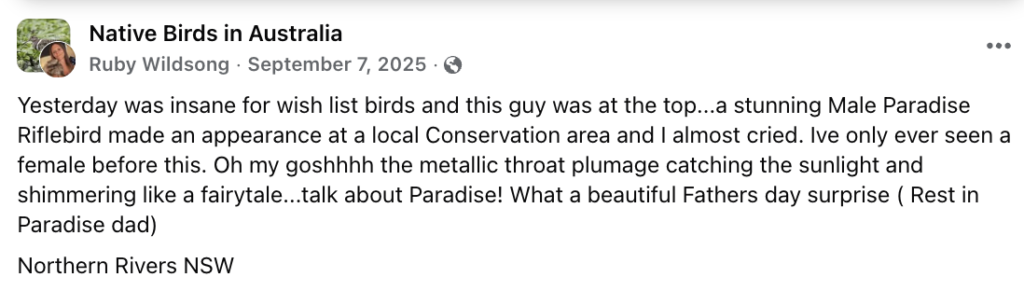
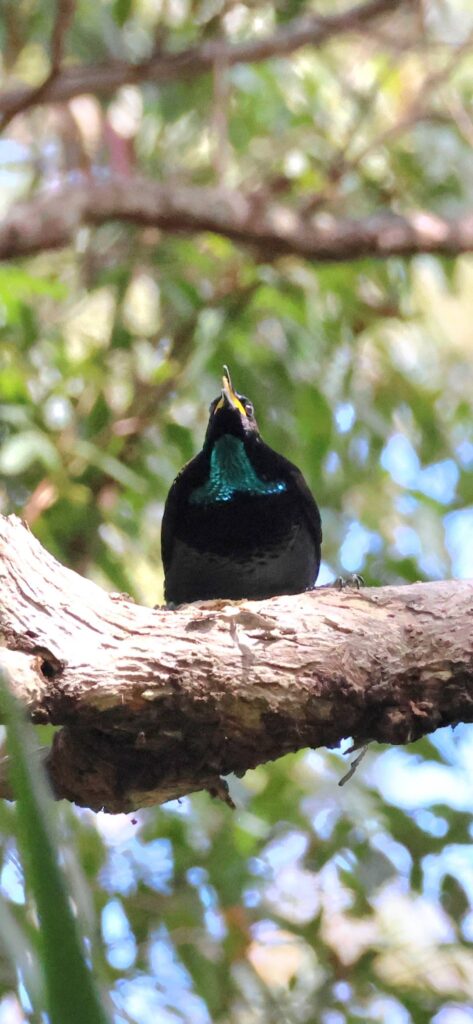
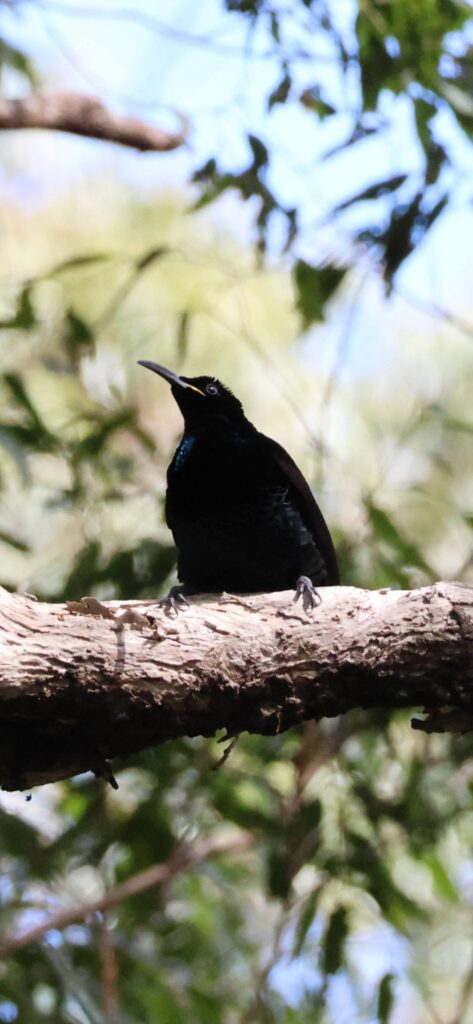
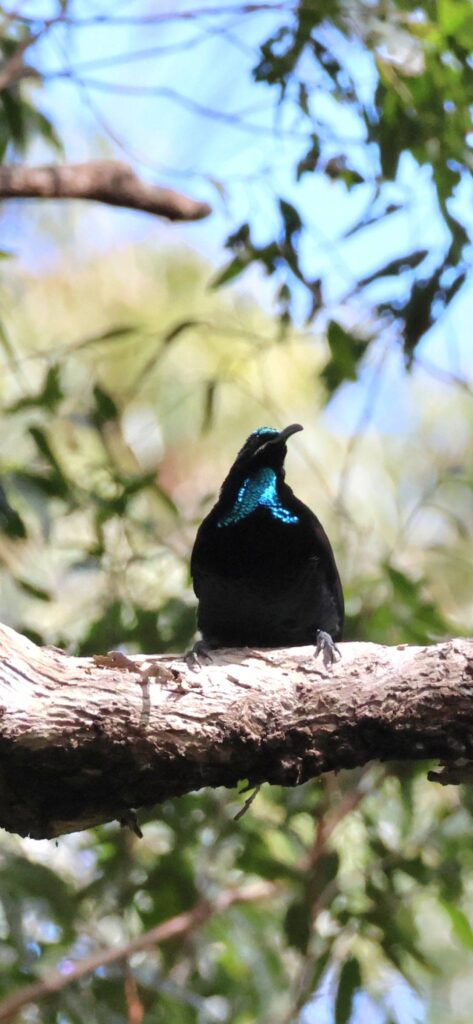
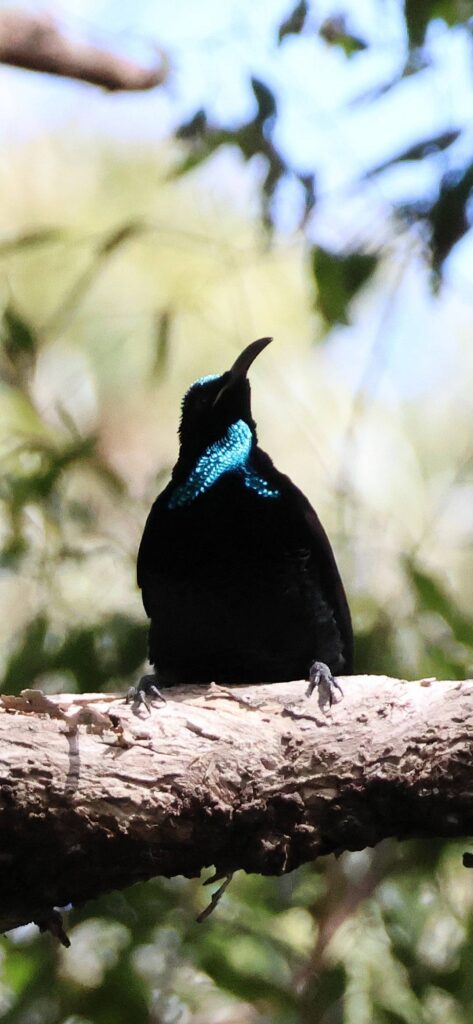
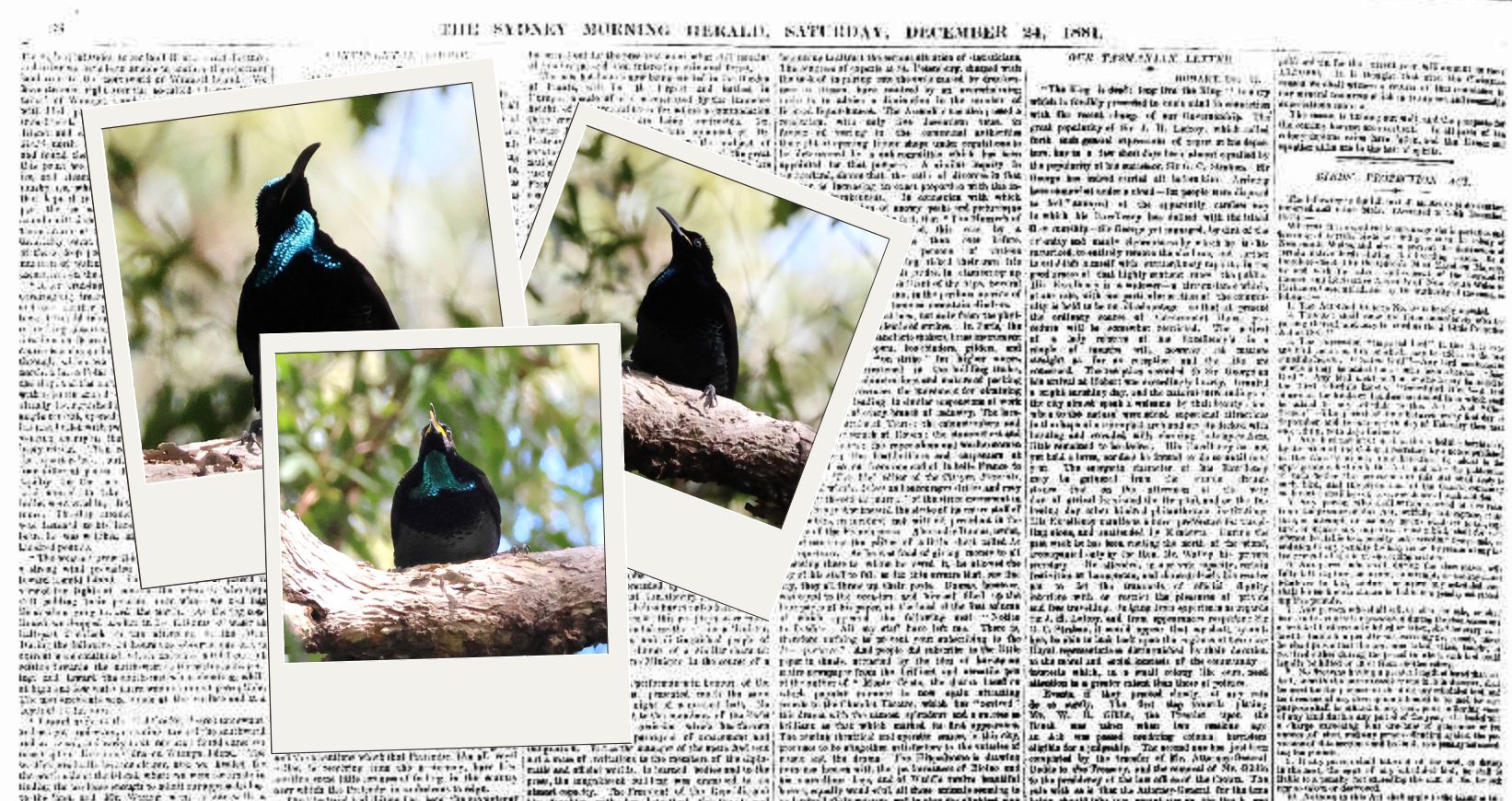
What a delightful sighting and Facebook post by Ruby Pearson!
Is the Paradise Riflebird a Big Scrub bird? I’ve never seen one and Ruby sure seemed pleased to see hers – what is the history of the Riflebird in the Big Scrub? Warning – my research revealed some brutal truths.
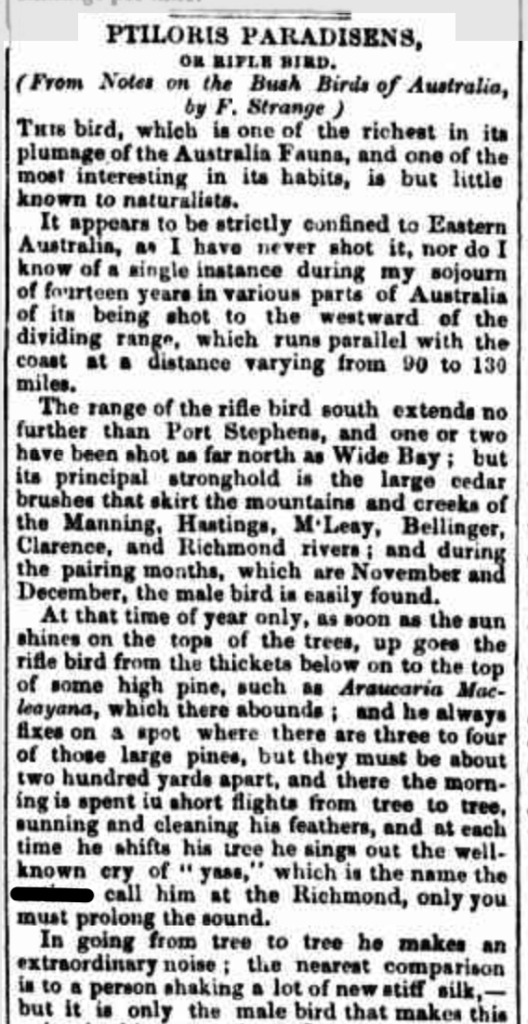
A Sydney Morning Herald (SMH) article by naturalist F Strange, written in 1850, gives some clues.
“This bird, which is one of the richest in its plumage of the Australia fauna, and one of the most interesting in its habits, is but little known to naturalists. It appears to be strictly confined to Eastern Australia, as I have never shot it, nor do I know of a single instance during my sojourn of fourteen years in various parts of Australia of its being shot to the westward of the dividing range… its principal stronghold is the large cedar brushes that skirt the mountains and creeks of the Manning, Hastings, McLeay, Bellinger, Clarence, and Richmond rivers.
“In the pairing months… the male bird is easily found on to the top of some high pine in short flights from tree to tree, sunning and cleaning his feathers… he descends lower down… he mostly chooses a thick limb of a red cedar tree… from the thickness of the limb and the closeness that he lays, it is most difficult to detect him… he will cautiously show his head, only then is the anxious moment, you take aim, the trigger is pulled, and a shot hits him in the head, he falls a lifeless victim at your feet.”
Yikes! Limited in range, methodically stalked and mercilessly shot for taxidermists and feather collectors! With the Big Scrub quickly disappearing, it was a good time for any bird to keep their head down!
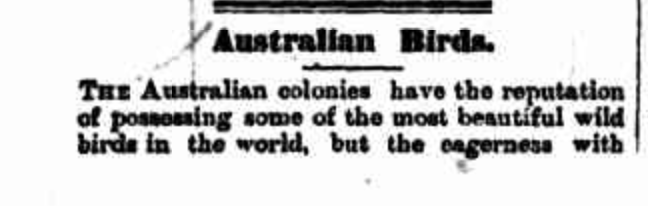
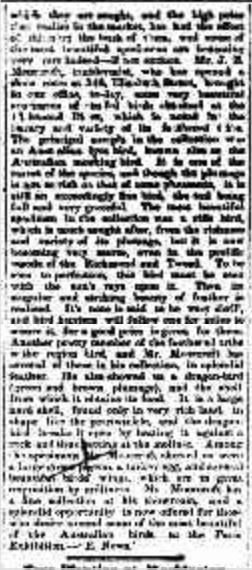
An article titled Birds of Australia published in the Northern Star, January 1878
“Australian colonies have the reputation of possessing some of the most beautiful wild birds in the world, but the eagerness with which they are sought, and the high price they realise in the market, has had the effect of thinning the bush of them, and some of the most beautiful specimens are becoming very rare indeed – if not extinct.
“(A taxidermist) brought to our office, to-day, some very beautiful specimens of stuffed birds obtained at the Richmond River, which is noted for the beauty and variety of its feathered tribe. The principal sample in the collection was an Australian lyre bird… the most beautiful specimen in the collection was a riflebird, which is much sought after… but it is now becoming very scarce, even in the prolific woods of the Richmond and Tweed… Its note is said to be very shrill, and bird hunters will follow one for miles to secure it.”
It is depressing to read of the prevailing attitude held to our beautiful and precious fauna in those times but, by the 1880s, there were signs of hope. In 1881 the NSW and Victorian Colonies introduced Bird Protection Acts.